



What's Happening?
The Trump administration has launched taxpayer-funded political advertisements, described by the White House as 'public service announcements,' which promote President Trump. These ads have drawn bipartisan criticism regarding their appropriateness and
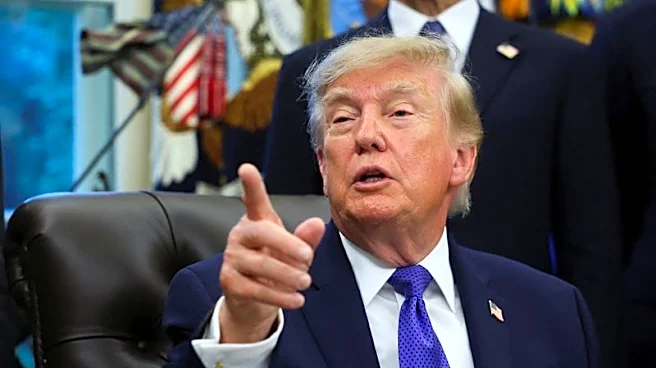
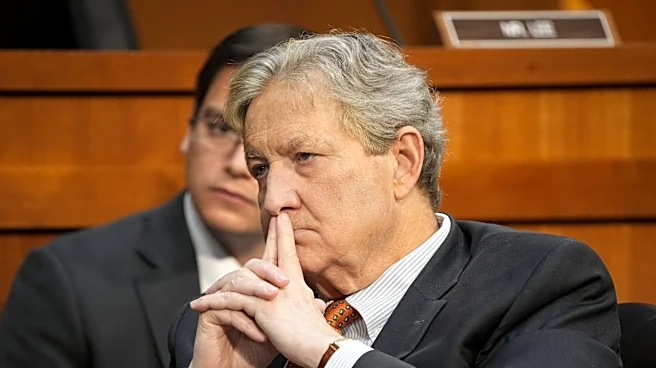
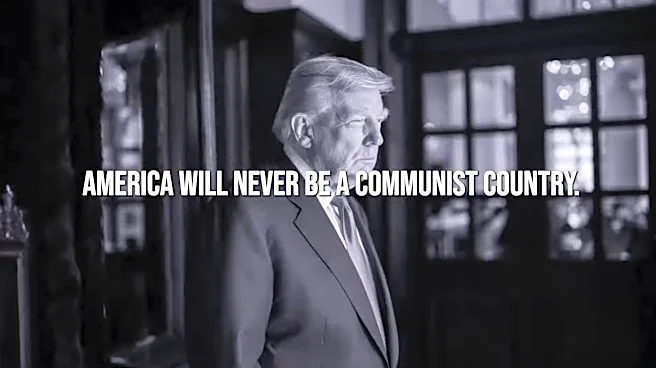
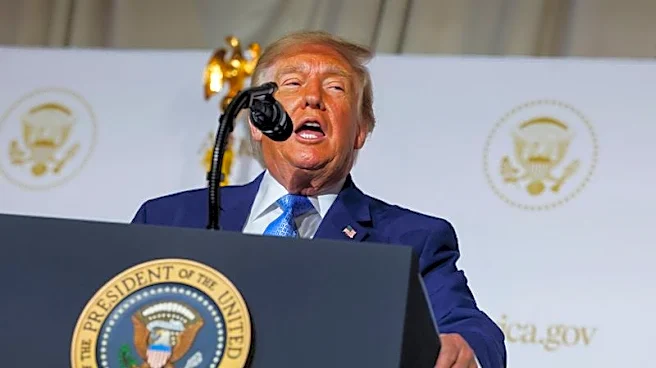
the use of public funds, especially with the November Midterm Elections approaching. According to AdImpact, a media spending tracker, the first 30-second ad, featuring President Trump discussing defeating communism and promoting 'the largest tax cuts in history,' cost at least $443,000. Another ad, similar to one from President Trump's 2024 campaign, had over $300,000 spent on it. Four Democratic lawmakers, Senators Patty Murray and Jack Reed, and Representatives Rosa DeLauro and Steny Hoyer, sent a letter to White House chief of staff Susie Wiles, calling the ads an 'egregious and illegal misuse of Americans’ hard-earned tax dollars' and comparing them to 'government propaganda one might expect in North Korea.' Republican Senators Thom Tillis and John Kennedy also voiced concerns, with Senator Kennedy stating no public official should 'spend public money on private ads for themselves.' The White House defended the ads as 'educational and unapologetically patriotic,' citing historical precedents for public service announcements.
Why It's Important?
This situation highlights a significant debate over the ethical and legal boundaries of government-funded communications, particularly when they appear to promote a sitting president during an election cycle. The use of taxpayer money for ads that feature President Trump and echo campaign-like rhetoric raises questions about potential misuse of public funds for political purposes. This could set a precedent for future administrations, blurring the lines between official government information and partisan campaigning. The bipartisan condemnation underscores the sensitivity of this issue, suggesting that both sides of the political spectrum recognize the potential for abuse. For the public, it means their tax dollars might be used to influence political discourse, rather than solely for non-partisan public service. The controversy also impacts public trust in government communications, as the White House's defense of the ads as 'patriotic' clashes with lawmakers' accusations of 'propaganda.'
What's Next?
With the midterm elections less than two months away, the controversy surrounding these taxpayer-funded advertisements is likely to intensify. Lawmakers, particularly the Democratic coalition that sent the letter to the White House, may pursue further actions, such as investigations or legislative efforts, to clarify rules regarding government advertising and prevent similar situations in the future. The White House is expected to continue defending the ads, potentially releasing more 'public service announcements' as the election draws nearer. The outcome of the midterm elections could significantly impact the administration's legislative priorities and the political landscape, making the perceived influence of these ads a critical point of contention. Public and media scrutiny will remain high, with ongoing analysis of ad spending and content. The debate could also lead to broader discussions about campaign finance laws and the role of government in shaping public opinion.
Beyond the Headlines
Beyond the immediate political implications, this issue touches upon fundamental principles of democratic governance and the separation of state resources from political campaigns. The accusation of 'government propaganda' raises concerns about the integrity of public information and the potential for an administration to leverage its power and resources to influence electoral outcomes. This could erode public trust in government institutions and the fairness of the electoral process. The debate also highlights the evolving nature of political communication in the digital age, where the lines between news, public service, and political advertising can become increasingly blurred. The long-term implications could include a re-evaluation of existing regulations governing government communications and potentially new legislation aimed at preventing the perceived weaponization of public funds for partisan gain. This incident serves as a critical case study in the ongoing struggle to maintain transparency and accountability in government.