





What's Happening?
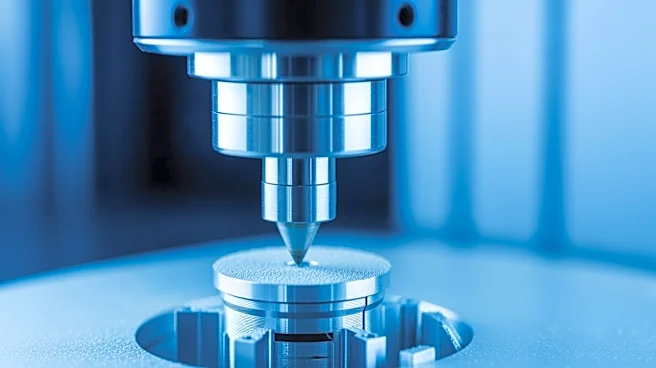
Jonathan Heier, a mechanical engineer at the Naval Undersea Warfare Center (NUWC) Division in Keyport, Washington, has been recognized for his contributions to additive manufacturing. Heier, who joined the center in 2024, has played a pivotal role in helping
the command achieve a Naval Sea Systems Command Additive Manufacturing Technical Publication qualification for organic metal printing. His work involves 3D printing and reverse engineering, directly supporting the Naval Sea Systems Command's strategic efforts to generate readiness and utilize data effectively. Heier's background includes a Bachelor of Science in mechanical engineering and a Master of Science in advanced manufacturing from the Colorado School of Mines. His career began at the Naval Air Warfare Center Weapons Division in China Lake, where he focused on production planning and additive manufacturing.
Why It's Important?
Heier's work in additive manufacturing is crucial for the U.S. Navy's operational readiness and technological advancement. Additive manufacturing, or 3D printing, allows for the rapid production of parts and components, which can significantly reduce downtime and maintenance costs for naval operations. This capability is particularly important for maintaining the fleet's operational readiness and ensuring that naval forces can respond quickly to emerging threats. By advancing the Navy's capabilities in this area, Heier's contributions help sustain the U.S. military's technological edge and support national defense objectives. His work also exemplifies the growing importance of engineering and technology in modern military operations, highlighting the need for skilled professionals in these fields.
What's Next?
As the Naval Undersea Warfare Center continues to develop its additive manufacturing capabilities, Heier's expertise will likely play a key role in future projects. The center may expand its use of 3D printing to include more complex components and systems, further enhancing the Navy's operational capabilities. Additionally, the success of Heier's work could lead to broader adoption of additive manufacturing techniques across other branches of the military, potentially transforming how the armed forces approach maintenance and logistics. Continued collaboration with other military and civilian research institutions could also drive innovation in this field, leading to new applications and technologies.