






What's Happening?
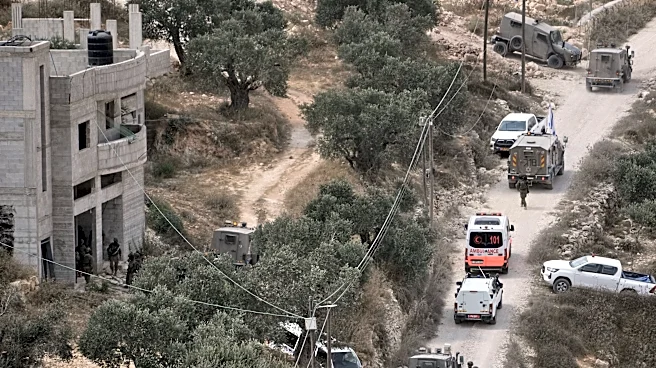
The Civil Administration’s Government Property Custodian has declared 1,522 dunams of land in the West Bank as 'state land' through two separate declarations. This action is primarily aimed at legalizing existing Israeli outposts, specifically Givat Harel
and Keidar South. Since the current government took office in December 2022, approximately 28,641 dunams have been declared state land, surpassing the total declared from the Oslo Accords until the formation of this government. Declaring land as 'state land' is a method used by Israel to assume control in the occupied territories, effectively removing it from Palestinian private ownership and allocating it exclusively to Israelis. For instance, 1,152 dunams were declared for the Givat Harel outpost, which was established in 1998, and 370.28 dunams for the Keidar South outpost, with the intention of connecting it to the planned Mishmar Yehuda settlement. This move is seen as a significant expansion of Israeli control and a barrier to a two-state solution.
Why It's Important?
This declaration of Palestinian land as 'state land' has profound implications for the prospects of a Palestinian state and the two-state solution. By taking control of these lands, the Israeli government is creating irreversible facts on the ground, making it increasingly difficult to establish a contiguous and viable Palestinian state. This policy directly impacts Palestinian landowners, who are prohibited from using their land once it is declared 'state land,' leading to displacement and economic hardship. The expansion of settlements and outposts is a major point of contention in international diplomacy and is widely considered a violation of international law. This action further entrenches the Israeli presence in the West Bank, exacerbating tensions and undermining efforts towards a peaceful resolution. The significant increase in declared state land under the current government indicates a deliberate strategy to expand Israeli control, which could lead to further international condemnation and regional instability.
What's Next?
Palestinian landowners have previously filed petitions with the High Court of Justice to challenge such declarations, as seen with the Keidar South outpost where a court order nisi was issued. It is likely that similar legal challenges will be mounted against these new declarations. International bodies and human rights organizations are expected to condemn these actions, potentially leading to increased diplomatic pressure on Israel. However, the Israeli government, particularly under the leadership of Prime Minister Netanyahu and Minister Smotrich, appears determined to continue these policies, viewing them as essential for the expansion of Israeli control. The long-term consequence could be a further erosion of the possibility of a two-state solution, leading to a prolonged conflict and increased calls for international intervention. The international community will need to decide whether to impose stronger sanctions or pursue alternative diplomatic strategies to address these ongoing land declarations.
Beyond the Headlines
The declaration of 'state land' is not merely a bureaucratic process; it is a tool of demographic and territorial control that reshapes the landscape of the Israeli-Palestinian conflict. This policy reflects a broader ideological commitment within certain segments of the Israeli government to expand sovereignty over the West Bank, effectively foreclosing the possibility of an independent Palestinian state. The use of legal mechanisms to dispossess Palestinians of their land raises ethical questions about justice, property rights, and self-determination. It also highlights the power imbalance between the Israeli state and Palestinian communities, who often lack the resources and political leverage to effectively resist these actions. The international community's response, or lack thereof, to these ongoing land declarations will have significant implications for the future of international law and the protection of human rights in occupied territories globally.