
What's Happening?
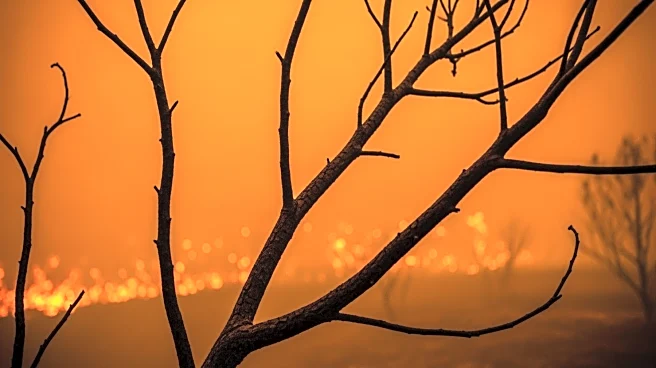
In 2025, global insured losses from natural catastrophes reached $107 billion, marking the sixth consecutive year that losses have surpassed $100 billion. The Los Angeles wildfires in January, which devastated
neighborhoods such as Pacific Palisades and Altadena, accounted for $40 billion of these losses, making them the costliest wildfire event globally. According to Swiss Re Institute, the U.S. experienced the majority of these losses, with $89 billion attributed to severe weather events, including tornadoes in March and May. The report highlights the increasing frequency and severity of natural disasters, exacerbated by climate change, as a new normal for the insurance industry.
Why It's Important?
The significant financial impact of the Los Angeles wildfires underscores the growing challenge of managing natural disaster risks in the U.S. insurance market, the largest in the world. The persistent high losses highlight the urgent need for investment in resilience and adaptation strategies to mitigate future risks. This trend poses a substantial economic burden on insurers and policyholders, potentially leading to higher premiums and stricter underwriting standards. The situation also emphasizes the broader implications of climate change on economic stability and the necessity for comprehensive policy responses to address these challenges.
What's Next?
As natural disasters become more frequent and severe, stakeholders, including insurers, policymakers, and communities, must prioritize resilience and adaptation measures. This could involve investing in infrastructure improvements, enhancing building codes, and developing innovative insurance products to better manage risks. Additionally, there may be increased pressure on governments to implement policies that address climate change and its impacts. The insurance industry may also explore new technologies and data analytics to improve risk assessment and management strategies.