




What's Happening?
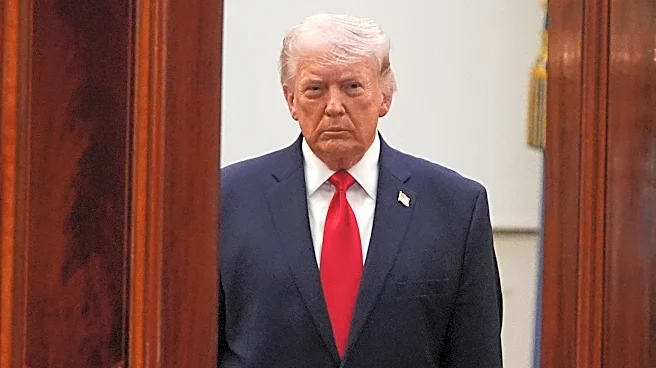
President Donald Trump has reportedly stated that weapons sent by the United States to Iranian protesters were intercepted by Kurdish forces. According to Fox News correspondent Trey Yingst, Trump mentioned in a phone interview that the U.S. had intended
for these weapons to reach Iranian protesters through Kurdish intermediaries, but they were allegedly retained by the Kurds. This revelation comes amidst ongoing tensions between the U.S. and Iran, with Trump previously distancing the U.S. from Kurdish involvement in the Iran conflict. The White House and Iranian foreign ministry have yet to comment on these claims.
Why It's Important?
This development highlights the complex dynamics of U.S. foreign policy in the Middle East, particularly regarding its alliances and military strategies. The alleged retention of weapons by the Kurds could strain U.S.-Kurdish relations and complicate the U.S.'s stance in the region. It underscores the challenges the U.S. faces in balancing support for regional allies while avoiding deeper entanglement in conflicts. The situation also reflects President Trump's broader approach of minimizing U.S. commitments abroad, which could impact the U.S.'s influence and relationships with key partners in the Middle East.
What's Next?
The situation may prompt further diplomatic discussions or investigations into the handling of military aid and its intended recipients. The U.S. may need to reassess its strategies and communication with Kurdish forces to ensure alignment with its foreign policy objectives. Additionally, the revelation could influence ongoing negotiations with Iran, as the U.S. seeks to manage its involvement in regional conflicts while pursuing diplomatic resolutions.