







What's Happening?
The European Union has officially implemented its U-space regulations for uncrewed aircraft system traffic management (UTM), with Commission Implementing Regulation (EU) 2021/664 becoming legally applicable across EU Member States on January 26, 2023.
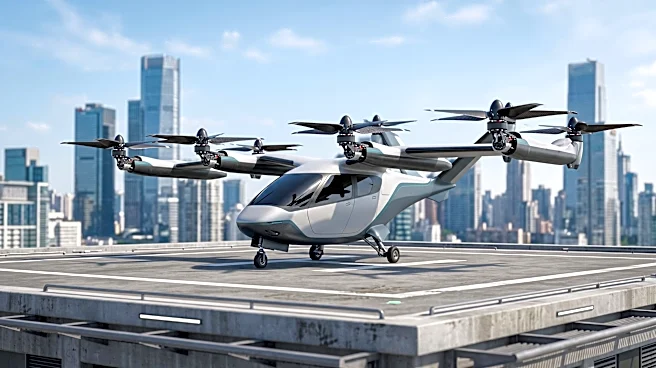
This framework establishes a digital and highly automated environment for drones to safely share low-altitude airspace with crewed aviation. U-space replaces traditional voice-based radio communications with machine-to-machine protocols, automated flight authorizations, and continuous digital situational awareness. The regulations coordinate uncrewed aircraft operations in congested and urban areas, supporting advanced missions such as beyond visual line of sight (BVLOS) flights and advanced air mobility corridors. The framework is designed to prevent mid-air collisions and safeguard crewed aircraft. Further cybersecurity requirements under Regulation (EU) 2023/203 are set to take effect on February 22, 2026. The U-space architecture relies on a clear separation of responsibilities among U-space Service Providers (USSPs), Common Information Service Providers (CISPs), and Air Navigation Service Providers (ANSPs).
Why It's Important?
While the U-space regulations are specific to the European Union, they set a precedent for advanced drone traffic management that could influence global standards, including those in the United States. The U.S. Federal Aviation Administration (FAA) UTM concept operates with a decentralized, federated network where private UAS Service Suppliers (USS) exchange information via industry consensus standards, unlike the EU's legally mandated centralized Single CISP model. The EU's comprehensive and binding statutory framework highlights a different approach to governance, data exchange, and commercial implementation compared to the U.S. model. This divergence could impact U.S. companies operating internationally or those developing technologies for global drone markets, requiring them to adapt to varying regulatory landscapes. The emphasis on digital services, automated authorizations, and cybersecurity also underscores the evolving nature of airspace management, pushing for greater technological integration and security measures that could eventually become global best practices.
What's Next?
The European U-space framework will continue to evolve, with additional cybersecurity requirements under Regulation (EU) 2023/203 becoming applicable from February 22, 2026. This will necessitate further integration of information security risk management for all aviation service providers, including USSPs and CISPs. The ongoing development and implementation of U-space will likely serve as a case study for other international aviation jurisdictions, including the United States, as they refine their own UTM concepts. The success and challenges encountered by the EU in managing drone traffic in complex airspaces could inform future policy decisions and technological advancements in the U.S. and globally. Furthermore, the framework's four-stage evolutionary roadmap (U1 through U4) suggests a continuous progression towards more autonomous and integrated air traffic management, which will drive innovation in drone technology and services.
Beyond the Headlines
The implementation of U-space signifies a fundamental shift in how airspace is managed, moving from traditional human-centric air traffic control to highly automated, machine-to-machine protocols. This digital transformation raises significant ethical and legal questions regarding accountability in the event of system failures or accidents, as well as data privacy and security for drone operators and the public. The federated, competitive service framework within U-space, where multiple USSPs can operate, also introduces complexities related to interoperability and fair competition. The long-term implications include the potential for widespread adoption of advanced air mobility, such as urban air taxis, and the integration of uncrewed and crewed aviation, which will require continuous adaptation of legal frameworks, public acceptance, and robust cybersecurity defenses to ensure safety and public trust. The differing approaches between the EU and the U.S. in drone governance also highlight broader philosophical differences in regulatory oversight versus industry-led standards.