







What's Happening?
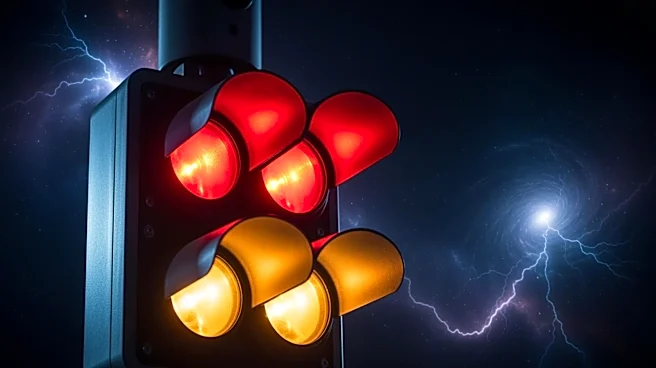
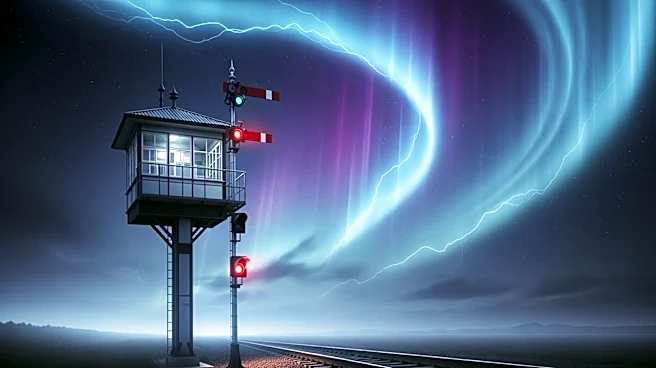
Recent research highlights the vulnerability of train systems to space weather, which can disrupt critical safety equipment. According to Cameron Patterson from Lancaster University, solar storms can induce unexpected currents in railway tracks, potentially
causing red signals to turn green, leading to fatal train accidents. This phenomenon occurs when the sun emits charged particles during solar storms, affecting Earth's magnetic field and, consequently, electrical systems on the ground. The risk is particularly significant for railway systems that rely on direct currents to detect train presence. Historical instances, such as a 1982 incident in Sweden, have shown signals switching due to geomagnetically induced currents. While the probability of such events is low, with significant solar storms occurring approximately once every 30 years, the potential consequences necessitate preparedness.
Why It's Important?
The implications of space weather on train safety are profound, as they highlight a critical vulnerability in transportation infrastructure. The potential for signal disruptions poses a risk not only to passenger safety but also to the operational integrity of rail networks. This issue underscores the need for railway systems to enhance their resilience against geomagnetic disturbances. The economic impact could be substantial, with disruptions leading to delays, increased operational costs, and potential liability issues. Moreover, the research calls for a reevaluation of current safety protocols and the development of mitigation strategies to safeguard against these rare but potentially catastrophic events.
What's Next?
Efforts are underway to address these vulnerabilities, with collaborations between researchers and railway authorities to improve system resilience. In the UK, discussions with Network Rail and the Rail Safety Standards Board are ongoing to develop strategies that mitigate the impact of solar storms. These initiatives may include technological upgrades, such as the implementation of alternative signaling systems less susceptible to geomagnetic interference. Additionally, increased awareness and training for engineers to recognize and respond to space weather-related anomalies could be crucial in preventing future incidents.