




What's Happening?
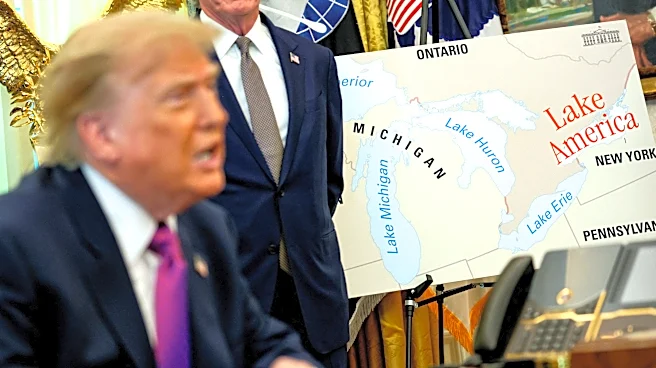
During an Oval Office event focused on drug prices, President Trump publicly stated, 'I didn't wanna fire a Kennedy!' while standing alongside Robert F. Kennedy Jr., his Secretary of Health and Human Services. This declaration comes amidst reports that
President Trump has contemplated dismissing Kennedy and direct calls from lawmakers, such as Rep. Don Beyer (D-VA), for Kennedy's removal. Rep. Beyer urged President Trump to fire Kennedy due to his 'attacks on vaccine science and public health,' arguing that Kennedy's continued presence endangers American children, mothers, and families. Kennedy, during his speech at the event, credited President Trump for achieving lowered drug prices, stating that 'This couldn't have happened under any other president except for this one.' He also mentioned that President Trump had made it clear that their jobs were dependent on getting the drug price reforms through.
Why It's Important?
President Trump's public statement about not wanting to fire Secretary Kennedy is significant because it highlights the political complexities and internal dynamics within his administration, especially concerning a cabinet member facing substantial criticism. The ongoing calls for Kennedy's dismissal, particularly from a Democratic lawmaker, underscore deep divisions over public health policy, especially regarding vaccine science. Kennedy's controversial views and actions, as cited by Rep. Beyer, pose a challenge to the administration's credibility on health matters. President Trump's decision to retain Kennedy, despite these pressures, could be interpreted as a strategic move to maintain political alliances or a reflection of his own alignment with some of Kennedy's unconventional perspectives. This situation impacts public trust in federal health guidance and the perceived stability of the Department of Health and Human Services.
What's Next?
The public declaration by President Trump suggests that Secretary Kennedy's position, for now, is secure, at least from the President's direct action. However, the calls for his dismissal are likely to continue, particularly from those concerned about his influence on public health policy. The administration will likely continue to navigate the balance between supporting Kennedy and addressing the criticisms leveled against him. Future events and statements from Kennedy, especially concerning vaccines and public health, will be closely scrutinized. The ongoing debate will likely influence public discourse on health policy and could become a point of contention in future political campaigns. The White House may also seek to manage the narrative around Kennedy's role to minimize negative impacts on the administration's broader agenda.
Beyond the Headlines
President Trump's comment about not wanting to fire a 'Kennedy' taps into a deeper historical and political narrative in the U.S., referencing the prominent Kennedy family legacy. This adds a layer of political symbolism to what would otherwise be a standard cabinet appointment issue. The tension between a President's loyalty to an appointee and the demands for accountability from other political figures highlights the intricate web of relationships and power plays in Washington. Furthermore, the controversy surrounding Secretary Kennedy's views on vaccine science reflects a broader societal struggle between established scientific consensus and alternative viewpoints, often amplified in the political arena. This dynamic can have profound implications for how scientific information is communicated and trusted by the public, potentially affecting national health outcomes and the integrity of public institutions.