






What's Happening?
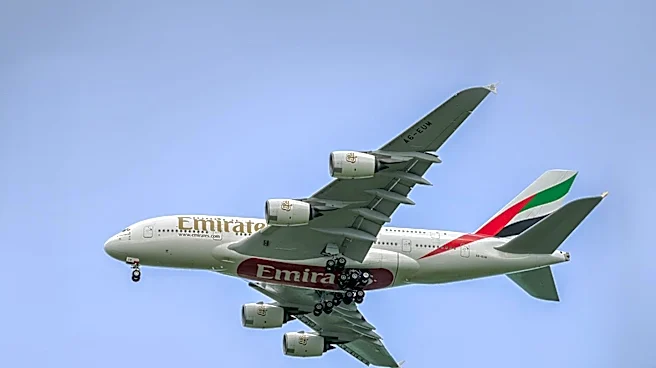
Travelers in the UAE are experiencing ongoing delays and cancellations as Emirates, Etihad Airways, Air Arabia, and flydubai adjust their flight schedules. These adjustments are a response to regional tensions and various operational challenges. International
airlines, including Air France, KLM, British Airways, and Finnair, have also either curtailed or suspended services to Dubai, Abu Dhabi, and other Middle Eastern gateways. Air France, for instance, has extended its suspension of Dubai flights until at least September 8, while Cathay Pacific has postponed the resumption of services to Dubai and Riyadh. Many carriers are actively avoiding Iranian and Iraqi airspace, leading to rerouted flights, longer travel times, and reduced operational flexibility, which in turn increases the likelihood of further delays. Beyond geopolitical factors, operational issues like volcanic ash incidents, such as those affecting flights between the UAE and Indonesia due to closures at Jakarta’s Soekarno Hatta International Airport, and high passenger demand during the post-summer period are also contributing to the disruptions.
Why It's Important?
The rolling disruptions in UAE flights carry significant implications for U.S. travelers and businesses. The Middle East serves as a crucial global aviation hub, connecting the U.S. to Asia, Africa, and Europe. Delays and cancellations in this region can cascade through the international air travel network, affecting connecting flights for U.S. citizens and impacting supply chains for U.S. businesses that rely on air cargo. The avoidance of certain airspaces due to regional tensions also increases operational costs for airlines, which could eventually translate into higher ticket prices or reduced service options for consumers. Furthermore, the unpredictability of flight schedules creates uncertainty for business travel, potentially hindering international commerce and investment. The situation underscores the fragility of global connectivity in the face of geopolitical instability and other unforeseen operational challenges, highlighting the need for robust contingency planning for U.S. entities engaged in international travel and trade.
What's Next?
Travelers planning to fly to or through the UAE are strongly advised to continuously monitor their flight status through official airline websites and mobile applications. Airlines are recommending that passengers arrive at airports well in advance, typically three to four hours before departure, and utilize online check-in services. The situation is expected to remain dynamic, with schedules subject to change on short notice as security assessments and airspace constraints evolve. International aviation safety authorities are extending conflict-zone guidance for parts of Gulf airspace, indicating that rerouting and longer flight times may persist. Airlines will likely continue to prioritize core routes while making targeted adjustments to less critical services. The industry will also be closely watching for any de-escalation of regional tensions or resolutions to operational issues like volcanic activity, which could lead to a gradual return to more stable flight operations.
Beyond the Headlines
The ongoing flight disruptions in the UAE reveal deeper vulnerabilities in the global aviation system, particularly its susceptibility to geopolitical events and environmental factors. The reliance on specific airspaces for efficient routing means that regional conflicts can have disproportionate impacts on international travel and trade. This situation also highlights the complex interplay between national security concerns, airline economics, and passenger convenience. The increased operational costs and reduced flexibility for airlines could accelerate the adoption of new technologies for route optimization or alternative fuel sources to mitigate the impact of longer flight paths. Furthermore, the disruptions could prompt a re-evaluation of global air traffic management strategies, potentially leading to more resilient and adaptable systems that can better absorb shocks from regional instability or natural disasters. For travelers, it underscores the growing importance of travel insurance, flexible booking options, and staying informed about global events that can affect their journeys.