

What's Happening?
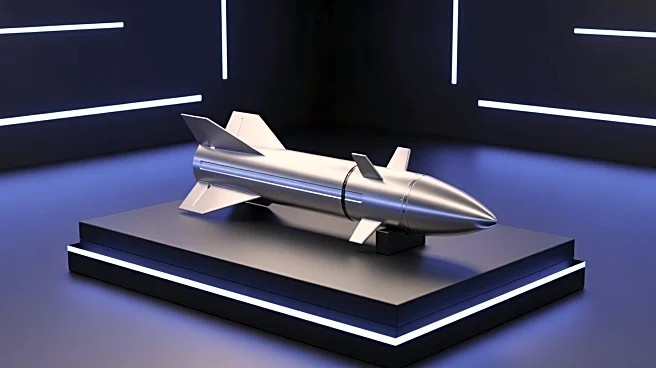
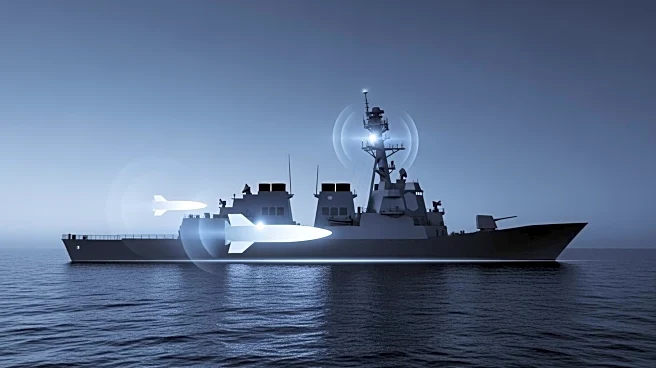
The Japanese destroyer JS Chokai has been equipped with U.S. Tomahawk cruise missiles, marking a significant enhancement in Japan's defense capabilities. This development is part of Japan's strategy to shift from a strict homeland defense posture to a semi-regional
deterrence model. The JS Chokai underwent renovations and crew training in California with the U.S. Third Fleet and is scheduled for live-fire training in August before returning to its home port in Sasebo, Japan. The integration of Tomahawk missiles allows the destroyer to strike targets over 1,000 kilometers away, aligning with Japan's 2022 defense strategy to bolster its stand-off capabilities. This move is seen as a response to regional security challenges and aims to strengthen Japan's ability to counter potential threats.
Why It's Important?
The equipping of JS Chokai with Tomahawk missiles represents a pivotal shift in Japan's defense strategy, enhancing its ability to project power and deter regional threats. This development is crucial for Japan's national security, as it provides a counterstrike capability that extends beyond its traditional defense posture. The move also reflects Japan's commitment to strengthening its military alliance with the United States, as the integration and training were conducted in collaboration with the U.S. Navy. Additionally, the acquisition of Tomahawk missiles is part of a broader effort to modernize Japan's defense forces and ensure readiness against potential regional conflicts, particularly in the context of rising tensions in the Indo-Pacific region.
What's Next?
Japan plans to conduct live-fire trials of the Tomahawk missiles from JS Chokai later in 2026 to validate the new capability. The country is also expected to continue its efforts to enhance its defense posture by integrating similar capabilities across its fleet of Aegis-equipped destroyers. This includes the potential deployment of upgraded Type 12 missiles and hyper velocity gliding projectile systems. As Japan strengthens its military capabilities, it may face diplomatic challenges, particularly with neighboring countries that may view these developments as a shift towards a more assertive military stance. Japan will need to navigate these challenges while maintaining its commitment to regional peace and stability.