



What's Happening?
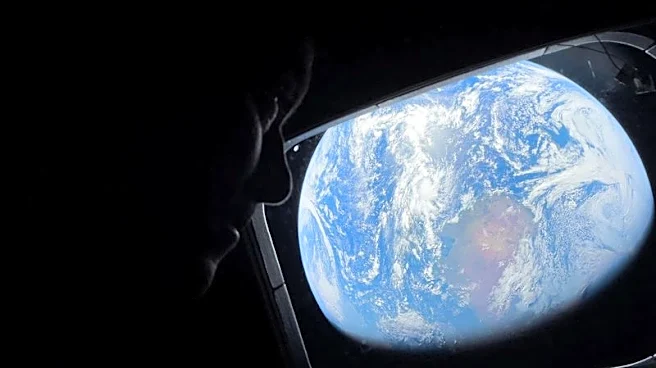
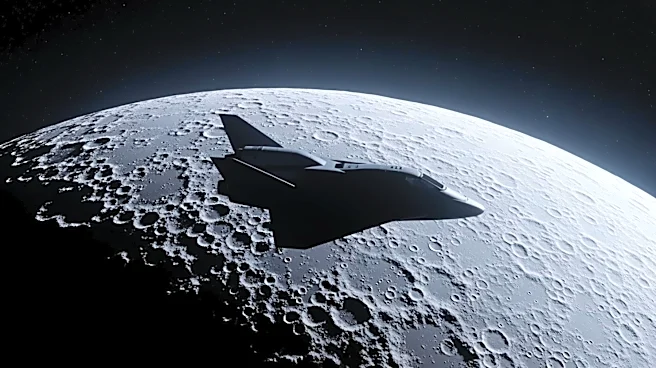
NASA's Artemis II mission is currently underway, with astronauts Reid Wiseman, Victor Glover, Christina Koch, and Jeremy Hansen conducting a flyby of the Moon. This mission marks the first human spaceflight to the Moon since the Apollo 17 mission in 1972.
The crew is engaged in various scientific experiments, including collecting saliva samples to study immune system responses to space conditions and using 'organ-on-a-chip' technology to simulate bone marrow reactions to radiation. The mission aims to gather data to improve astronaut health and safety for future deep space missions. The crew is also testing a protection shelter against solar radiation and dealing with technical challenges, such as repairing a malfunctioning toilet on board.
Why It's Important?
The Artemis II mission is a critical step in NASA's broader Artemis program, which aims to establish a sustainable human presence on the Moon by 2028. The scientific experiments conducted during this mission will provide valuable insights into the effects of space travel on human health, which is essential for planning long-duration missions to Mars and beyond. The mission also demonstrates international collaboration, with Canadian astronaut Jeremy Hansen participating. The success of Artemis II could bolster public and political support for continued investment in space exploration, despite criticisms regarding its high costs amid domestic economic challenges.
What's Next?
Following the completion of the Artemis II mission, NASA plans to continue its Artemis program with subsequent missions aimed at landing astronauts on the lunar surface and establishing a lunar base. The data collected from Artemis II will inform the design of future missions, including the development of personalized medical kits for astronauts. The mission's success could also influence international partnerships and collaborations in space exploration, as countries like China increase their presence in space.
Beyond the Headlines
The Artemis II mission highlights the ongoing debate about the allocation of resources to space exploration versus addressing pressing issues on Earth. While the mission represents a significant technological achievement, it also raises questions about the ethical implications of investing billions in space programs when many Americans face economic hardships. Additionally, the mission underscores the importance of international cooperation in space, as geopolitical tensions continue to shape global dynamics.