




What's Happening?
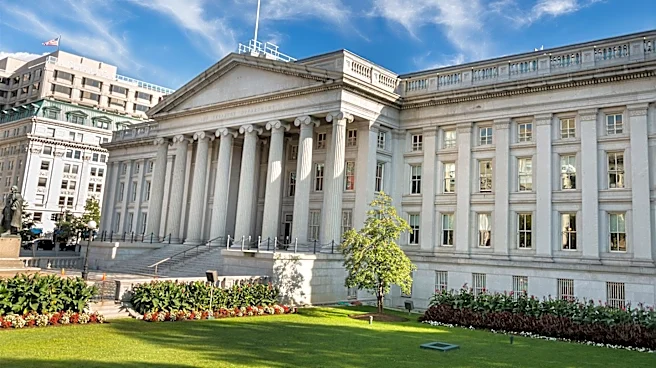
Treasury Secretary Scott Bessent has indicated that the Trump administration will impose additional sanctions on banks accused of facilitating business with Iran. This announcement was made on the sidelines of the G20 summit in North Carolina. Bessent stated
that these new sanctions are part of an ongoing economic pressure campaign against Iran, aiming to intensify the financial squeeze on the country. He emphasized that the Treasury Department now possesses five new authorities, which will be utilized across various sectors including digital assets, aviation, and maritime activities. Bessent highlighted the broad international support for these measures, citing cooperation from allies such as the European Union, the European Central Bank, the United Kingdom, the United Arab Emirates, and Bahrain. The Secretary reiterated a 'zero tolerance' policy regarding financial transactions with Iran that circumvent sanctions.
Why It's Important?
This move signifies a significant escalation in the Trump administration's economic pressure campaign against Iran. By targeting banks and expanding the scope of sanctions to include digital assets, aviation, and maritime sectors, the U.S. aims to further isolate Iran from the global financial system. This strategy is intended to 'economically asphyxiate' the Iranian regime, compelling it to agree to a deal acceptable to President Trump. The involvement of international allies, including major economic blocs and Middle Eastern nations, underscores a coordinated effort to enforce these sanctions, potentially limiting Iran's ability to circumvent them. The increased intensity of these sanctions could have profound implications for global trade and financial institutions that have any dealings, direct or indirect, with Iran, forcing them to choose between access to the U.S. financial system and business with Iran. This could also impact the stability of the global oil market, given Iran's role as an oil producer.
What's Next?
The Treasury Department is expected to roll out the specific details of these new sanctions, which will likely identify the targeted banks and outline the precise nature of the restrictions. Financial institutions globally will need to assess their exposure and compliance measures to avoid penalties. The Iranian government's reaction to this intensified economic pressure will be crucial; it could lead to further diplomatic tensions, or potentially, a return to negotiations under duress. The effectiveness of these sanctions will depend on the continued unity and enforcement efforts of the U.S. and its allies. Businesses operating in sectors like digital assets, aviation, and maritime will need to closely monitor the evolving regulatory landscape to ensure compliance and mitigate risks associated with potential dealings with Iran.
Beyond the Headlines
The expansion of sanctions into digital assets reflects a growing recognition by the U.S. government of the role cryptocurrencies and other digital financial tools can play in circumventing traditional financial controls. This move could set a precedent for how international sanctions are applied in the increasingly digital global economy. Furthermore, the 'economically asphyxiate' rhetoric highlights a strategy that goes beyond deterrence, aiming for a fundamental shift in Iran's economic and political behavior. This approach raises questions about the long-term humanitarian impact on the Iranian populace, as severe economic pressure can lead to widespread hardship. The broad international support cited by Secretary Bessent also suggests a strengthening of a global coalition against Iran, potentially reshaping geopolitical alliances and trade routes in the Middle East and beyond.