



What's Happening?
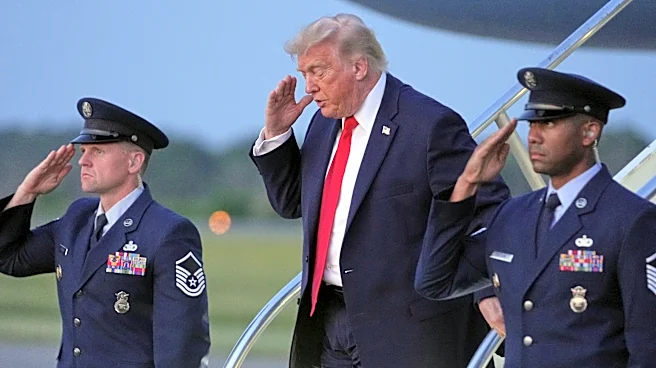
WFYI and NPR have been awarded a national accolade for their investigative reporting on the effects of the Trump administration's cuts to federal civil rights enforcement in schools. The award, part of the 2025 National Awards for Education Reporting,
was announced by the Education Writers Association. The recognized work includes two audio features by former WFYI investigative reporters Dylan Peers McCoy and Lee V. Gaines, with contributions from WFYI editor Eric Weddle, NPR editor Nicole Cohen, and producer Lauren Migaki. The investigation highlighted the disproportionate suspension rates of students receiving special education services in Indiana, revealing that these students were suspended more than twice as often as their peers. Additionally, the reporting followed the story of Amy Cupp, a mother whose daughter faced repeated seclusion and restraint at school, and whose federal civil rights complaint stalled due to significant staff reductions in the U.S. Department of Education's Office for Civil Rights during the Trump administration.
Why It's Important?
This award-winning investigation sheds light on the significant impact of federal policy changes on vulnerable student populations, particularly those requiring special education services. The reporting underscores the consequences of reduced federal oversight, which can lead to increased disciplinary actions against students with disabilities and a lack of accountability in educational institutions. By bringing these issues to the forefront, the investigation not only highlights systemic challenges within the education system but also emphasizes the importance of maintaining robust civil rights enforcement to protect students' rights. The recognition of this work by a national award underscores the critical role of investigative journalism in holding institutions accountable and advocating for policy changes that support equitable education for all students.
What's Next?
The findings from this investigation may prompt further scrutiny of federal and state education policies, particularly those affecting students with disabilities. Stakeholders, including educators, policymakers, and advocacy groups, may use this information to push for reforms that ensure better protection and support for students requiring special education services. Additionally, the highlighted issues could lead to renewed discussions on the allocation of resources and staffing within the U.S. Department of Education's Office for Civil Rights, aiming to restore its capacity to effectively handle civil rights complaints. The ongoing dialogue may also influence future administrations' approaches to education policy and civil rights enforcement.