


What's Happening?
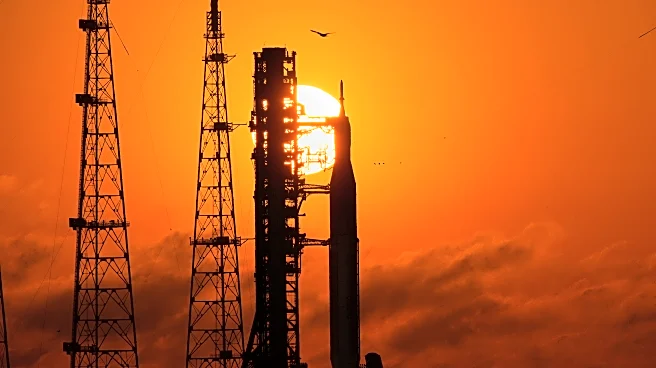
NASA is preparing for the launch of Artemis II, scheduled for April 1, from Florida's Kennedy Space Center. Judd Frieling, a Central Texas native and University of Texas graduate, will lead the ascent flight control team. Frieling's role involves overseeing
the crew's ascent to space, managing the performance of the SLS core stage engines, solid rocket boosters, and propulsion systems until the Orion spacecraft separates from the Interim Cryogenic Propulsion Stage. Frieling has a history of significant contributions to NASA, having developed new operations processes that allowed the Mission Control Center to operate with smaller staffs during quieter periods. The Artemis II mission includes NASA astronauts Reid Wiseman, Victor Glover, Christina Koch, and Canadian Space Agency astronaut Jeremy Hansen. The mission builds on lessons from previous space programs like Apollo, Gemini, and the Shuttle programs.
Why It's Important?
The Artemis II mission is a critical step in NASA's long-term goal of sustained lunar exploration and eventual Mars missions. By testing the Orion spacecraft's life support systems with a crew aboard, NASA aims to ensure the safety and reliability of future missions that will involve landing on the Moon. This mission marks the first time humans will travel beyond Earth's orbit since the Apollo 17 mission in 1972, symbolizing a significant advancement in human space exploration. The involvement of international partners, such as the Canadian Space Agency, highlights the collaborative nature of modern space exploration efforts. Success in this mission could pave the way for more ambitious projects, potentially leading to a permanent human presence on the Moon and further exploration of Mars.
What's Next?
The launch is targeted for 6:24 p.m. ET on April 1, with a two-hour launch window and backup opportunities through April 6. Weather conditions are currently favorable, with an 80% chance of suitable conditions for launch. If successful, the mission will last 10 days, during which the crew will loop around the Moon and return to Earth. The mission's success will be a crucial milestone for NASA's Artemis program, setting the stage for future missions, including a crewed lunar landing as early as 2028. The outcomes of Artemis II will inform the planning and execution of subsequent missions, including Artemis III, which aims to land astronauts on the lunar surface.