



What's Happening?
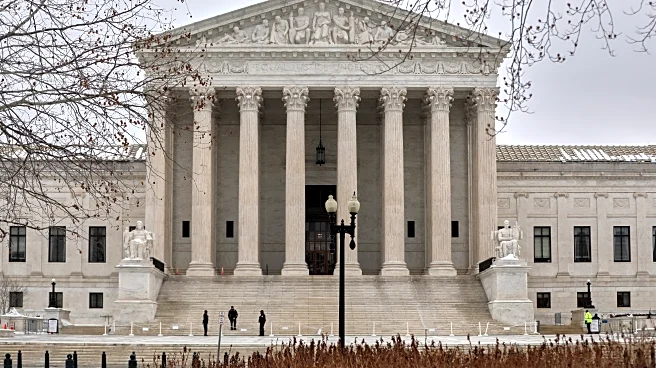
The U.S. Supreme Court has issued a ruling that limits the President's authority to impose tariffs, emphasizing that Congress holds the power to set tariff policy. This decision, made in a 6-3 vote, highlights the constitutional provision that grants
Congress the authority to levy tariffs, rather than the President using the International Emergency Economic Powers Act for such actions. Congressman Mike Flood from Nebraska noted that this ruling underscores the need for collaboration between Congress and the administration in shaping tariff policies. The decision is seen as a pivotal moment for U.S. agriculture trade, as it could influence market access and trade relations with countries like China, Vietnam, and Japan.
Why It's Important?
The Supreme Court's decision is significant for the U.S. agriculture sector, which has been affected by tariff policies in recent years. The ruling could lead to a more stable and predictable trade environment, benefiting farmers and exporters who have faced challenges due to fluctuating tariffs. The American Soybean Association and other trade groups have expressed concerns about the impact of tariffs on input costs and market access. By reaffirming Congress's role in tariff policy, the ruling may lead to more consistent trade strategies and reduce the risk of retaliatory measures from trading partners. This could enhance the competitiveness of U.S. agricultural products in the global market.
What's Next?
Following the Supreme Court's decision, there may be increased legislative activity in Congress to establish clear guidelines for tariff policies. Lawmakers and industry stakeholders are likely to engage in discussions to ensure that future tariff measures align with broader economic and trade objectives. The ruling could also prompt a reevaluation of existing tariffs and trade agreements, potentially leading to new negotiations with key trading partners. As the agriculture sector adapts to this legal shift, there may be opportunities for policy reforms that support sustainable trade practices and address the concerns of farmers and exporters.