


What's Happening?
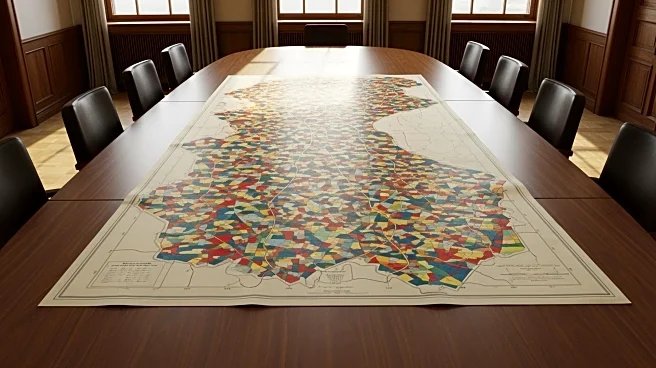
California Republicans have filed an emergency appeal to the U.S. Supreme Court to block the state's new congressional map. This map, drawn by Democrats and approved by voters through Proposition 50, could potentially allow Democrats to gain up to five
House seats in the upcoming midterm elections. The map was championed by Democratic Governor Gavin Newsom as a countermeasure to a GOP-drawn map in Texas, which is expected to benefit Republicans similarly. The Republicans argue that the map is racially gerrymandered, a claim that was previously rejected by a federal court, which concluded that the map was an intentional partisan gerrymander. The Republicans are seeking a Supreme Court decision by February 9, ahead of the candidate filing deadline on March 6 and the primary on June 2.
Why It's Important?
The outcome of this legal challenge could significantly impact the balance of power in the U.S. House of Representatives. If the Supreme Court sides with the Republicans, it could halt the implementation of the new map, potentially preserving Republican seats in California. Conversely, if the map is upheld, it could bolster Democratic efforts to regain or expand their majority in the House. This case highlights the ongoing national battle over redistricting, where both parties are accused of drawing district lines to gain electoral advantages. The decision could set a precedent for how courts handle claims of partisan gerrymandering, influencing future redistricting efforts across the country.
What's Next?
The Supreme Court's decision on this matter is awaited by February 9. If the court decides to block the map, California may need to redraw its congressional districts, which could delay the election process. Political leaders and candidates are closely monitoring the situation, as the decision will affect campaign strategies and voter outreach efforts. The ruling could also prompt further legal challenges in other states where redistricting is contested, potentially leading to a broader judicial review of gerrymandering practices.