



What's Happening?
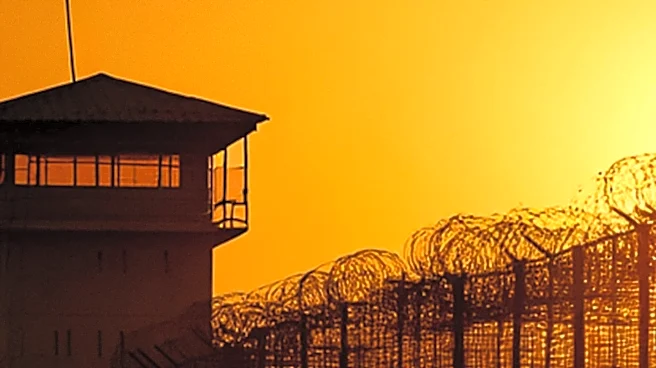
Chilean President José Antonio Kast has initiated a significant security measure by overseeing the transfer of nearly 300 high-risk inmates to the newly inaugurated La Laguna Prison. This facility, situated approximately 250 kilometers south of the capital,
Santiago, is central to Kast's broader strategy to combat organized crime, alleviate severe prison overcrowding, and dismantle criminal networks operated remotely by incarcerated gang leaders. The transfer involved 298 maximum-security prisoners, specifically targeting 40 alleged members of criminal organizations and nine identified gang leaders. La Laguna Prison is touted as Chile's most modern and secure correctional facility, designed to house 2,097 inmates across various units, including maximum-security wings. It is equipped with advanced surveillance technology, featuring 1,500 cameras, body scanners, and systems to block cellphone signals, aiming to prevent external communication by inmates. Although the prison opened last year under the previous left-wing President Gabriel Boric, its full operationalization and the current mass transfer are key components of President Kast's agenda. President Kast, an ally of President Trump, explicitly stated that this action sends an unequivocal message to criminals: "We are going to come after you, we are going to find you, you will be prosecuted and we are going to lock you up." This approach draws parallels with El Salvador's President Nayib Bukele's controversial mass incarceration campaign, which has been credited with reducing violence but also criticized by human rights groups for potential abuses and erosion of civil liberties.
Why It's Important?
This large-scale inmate transfer and the accompanying security push by President Kast represent a pivotal moment in Chile's national policy, signaling a decisive shift towards more stringent law enforcement tactics. The initiative aligns Chile with a growing trend among right-wing leaders across Latin America who advocate for robust, often hard-line, measures to combat organized crime, frequently citing El Salvador's President Nayib Bukele as a successful model. For Chile, a nation historically recognized for its relative safety in the region, this aggressive stance underscores escalating public concern over a recent surge in criminal activities, including kidnappings, extortion, drug trafficking, and the infiltration of transnational gangs such as Venezuela's Tren de Aragua. The success of this security drive is critical for President Kast, who has faced challenges in fulfilling his campaign promises, including early administrative changes and difficulties in implementing rapid immigrant deportations. His administration's ability to effectively reduce crime rates and enhance public safety will be a crucial factor in shaping his political trajectory and maintaining public confidence. However, the adoption of a strategy reminiscent of Bukele's also raises significant concerns among human rights organizations regarding the potential for arbitrary detentions, due process violations, and the erosion of fundamental civil liberties, echoing the criticisms directed at El Salvador's model. The balance between security and rights will be a key area of scrutiny.
What's Next?
Looking ahead, President Kast's administration intends to proceed with the phased transfer of additional prisoners to La Laguna Prison until it reaches its maximum capacity of 2,097 inmates. This ongoing process will serve as a critical test for the facility's operational efficiency and the government's capacity to manage a large-scale, high-security correctional system. Simultaneously, President Kast is actively advancing a comprehensive security legislative package through the Chilean Congress. These proposed laws are designed to bolster law enforcement capabilities significantly. Key provisions include mandating a permanent police presence in Chile's most dangerous neighborhoods, imposing tougher penalties for individuals involved in gang membership, and establishing a new state agency specifically tasked with seizing and liquidating assets linked to organized crime. Furthermore, the legislative proposals aim to relax existing regulations governing police use of force and to amend the constitution to simplify the declaration of states of emergency in response to severe security threats. The successful passage and subsequent implementation of these legislative measures will be instrumental in determining the long-term effectiveness of Kast's security agenda and its ability to address the nation's rising crime rates while navigating potential challenges related to human rights and democratic principles.
Beyond the Headlines
The Chilean government's embrace of a security paradigm inspired by El Salvador's President Nayib Bukele carries profound and multifaceted implications that extend far beyond immediate crime statistics. This approach, characterized by a strong emphasis on state power and mass incarceration, could signify a broader ideological shift within Latin American governance, potentially encouraging other nations grappling with similar security challenges to adopt more authoritarian methods in the pursuit of public safety. While such robust measures may initially garner widespread public support due to their perceived effectiveness in curbing rampant crime, they frequently invite intense scrutiny for their potential to undermine fundamental civil liberties, due process, and human rights. The stark imagery of shackled inmates and the stringent conditions within La Laguna Prison draw direct parallels with El Salvador's controversial mega-prison, prompting critical questions about the long-term societal costs of prioritizing security at the expense of individual freedoms. This development could also significantly influence regional political dynamics, potentially reshaping the democratic landscape of the continent as more countries consider similar hard-line strategies. The ethical, legal, and cultural debates surrounding these policies are expected to intensify as their full impact on Chilean society and its democratic institutions unfolds.