
What's Happening?
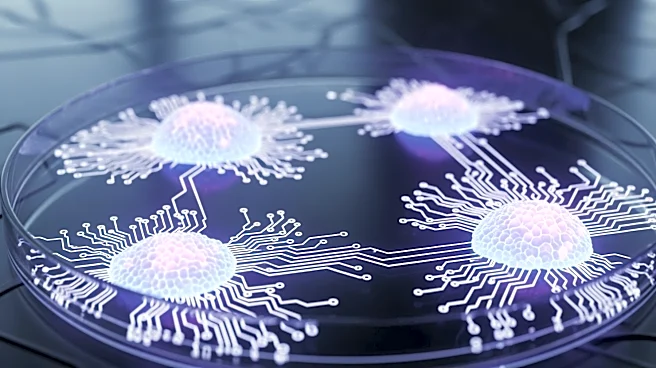
Researchers at Cortical Labs in Australia have successfully trained lab-grown human brain cells on a silicon chip to play the video game 'Doom'. This innovative research demonstrates the potential of these
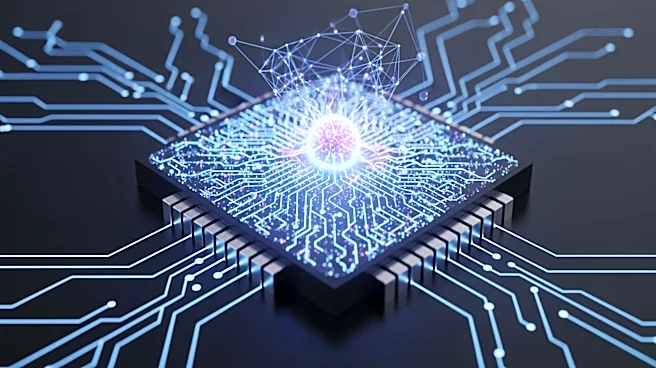
neurons to adapt to stimuli in real time and complete goal-directed learning. The brain cells, grown from stem cells, were initially trained on the simpler game 'Pong' before advancing to 'Doom'. The neurons were able to respond to the game's digital environment, which was converted into electrical signals they could understand. This research highlights the potential applications of the chip, known as CL1, in fields such as drug screening and AI-like machine learning. The CL1 chip is described as a more sustainable and powerful form of intelligence, with potential uses in robotics, healthcare, and personalized medicine.
Why It's Important?
This research represents a significant step forward in the integration of biological and digital systems, showcasing the potential for lab-grown brain cells to perform complex tasks. The ability of these neurons to learn and adapt in real time could lead to advancements in AI and machine learning, offering a more sustainable and efficient form of computing. Additionally, the CL1 chip's potential applications in drug screening and personalized medicine could revolutionize healthcare by providing more accurate and efficient methods for testing and treatment. This research also opens up new possibilities for understanding brain function and developing treatments for neurological disorders.
Beyond the Headlines
The integration of biological neurons with digital systems raises ethical and philosophical questions about the nature of intelligence and consciousness. As this technology develops, it will be important to consider the implications of creating systems that mimic human brain function. Additionally, the potential for these systems to outperform traditional computing methods could lead to significant shifts in the tech industry, with implications for data processing, energy consumption, and the development of new AI technologies. The research also highlights the need for continued exploration of the ethical and societal impacts of integrating biological and digital systems.