
What's Happening?
President Donald Trump's administration is considering extending a waiver that allows countries to purchase sanctioned Russian oil and petroleum products. This waiver, initially set to expire on April
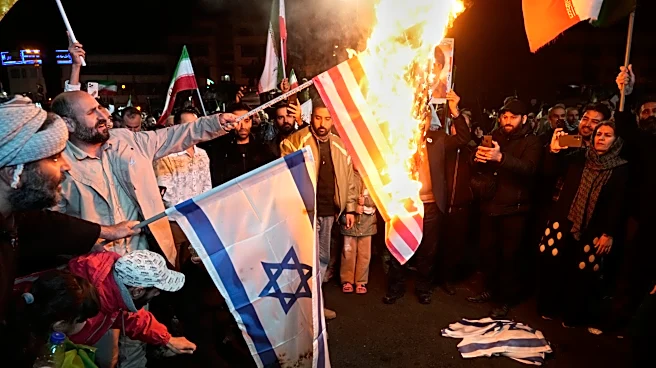
11, was introduced to stabilize global energy prices during the ongoing U.S.-Israeli conflict with Iran. The waiver could release 100 million barrels of Russian crude, which is nearly a day's worth of global output. Treasury Secretary Scott Bessent discussed the extension with President Trump, and they agreed on its potential benefits. The conflict has led to a spike in oil prices due to the partial closure of the Strait of Hormuz, a critical passage for global oil and gas shipments.
Why It's Important?
The extension of the waiver could have significant implications for global energy markets and geopolitical relations. While it aims to mitigate the impact of rising oil prices, it may also complicate efforts by Western nations to limit Russia's revenue, which is crucial for its military activities in Ukraine. The decision could strain relations between the U.S. and its allies, who are committed to maintaining sanctions against Russia. Additionally, the waiver's impact on oil prices is a critical concern for President Trump and the Republican Party, especially with midterm elections approaching.
What's Next?
If the waiver is extended, it could lead to further diplomatic tensions between the U.S. and its allies, particularly those in Europe who oppose relaxing sanctions against Russia. The decision may also influence global oil prices and affect the strategies of major oil-producing nations. The International Energy Agency has highlighted the unprecedented disruption in oil supply due to the Middle East conflict, suggesting that the waiver's extension could be a temporary measure in a complex geopolitical landscape.