






What's Happening?
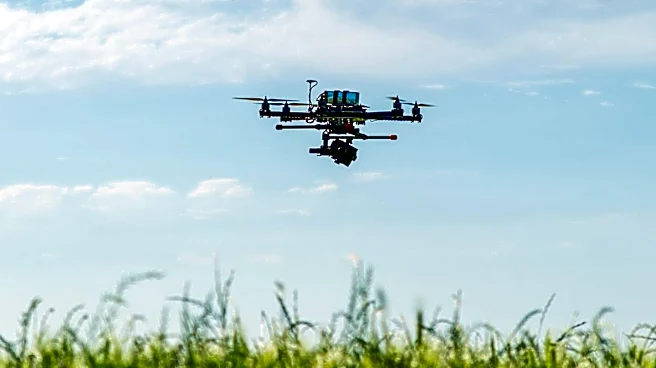
Surveillance drones are advanced unmanned aircraft designed to monitor areas by transmitting live sensor data. Unlike consumer drones, these industrial-grade systems prioritize mission-critical intelligence, often combining electro-optical (visible light)
and thermal cameras, optical zoom lenses, and laser rangefinders. They feature robust data links, automated flight routines, and are built to operate reliably in challenging weather conditions. These drones are composed of five interconnected subsystems: the airframe, sensor payload, communication link, flight software, and battery pack. Companies deploy them for patrolling industrial facilities and critical infrastructure, while public safety teams utilize them for rapid incident response and large-scale search operations. The technology allows for covering vast areas quickly from optimal viewing angles, bridging the operational gap left by fixed cameras and manual patrols.
Why It's Important?
The evolution of surveillance drones signifies a significant shift in how security, monitoring, and emergency response are conducted across various U.S. sectors. For industries, these drones offer enhanced perimeter security, efficient inspection of large sites like logistics hubs and warehouses, and immediate investigation of alarm triggers, potentially reducing security costs and improving response times. In public safety, they provide rapid situational awareness for police and fire departments, aid in search-and-rescue operations with thermal imaging, and quickly assess damage after disasters, thereby optimizing resource allocation and improving safety for responders. The ability of these drones to operate in diverse conditions and provide real-time data makes them an invaluable asset, contributing to increased efficiency and effectiveness in both commercial and governmental applications, ultimately impacting public safety and industrial security nationwide.
What's Next?
The future of surveillance drones will likely see continued advancements in battery technology, sensor capabilities, and artificial intelligence for autonomous flight and data analysis. As these technologies mature, drones will become even more integrated into routine security and monitoring protocols, potentially leading to fully automated surveillance systems that require minimal human intervention. There will also be an increased focus on regulatory frameworks to address privacy concerns and ensure responsible deployment, especially as drones become more sophisticated in identifying individuals and vehicles. The development of hybrid VTOL and tethered drones indicates a trend towards specialized solutions tailored for specific operational needs, promising greater endurance and operational flexibility for various surveillance missions.
Beyond the Headlines
The widespread adoption of surveillance drones introduces complex ethical and legal considerations, particularly concerning privacy. While their utility in enhancing security and public safety is clear, the potential for continuous, pervasive monitoring raises questions about individual liberties and the scope of surveillance in a democratic society. The ability of drones to collect vast amounts of data, including thermal signatures and high-resolution imagery, necessitates robust legal frameworks and public discourse on data retention, access, and usage. Balancing the benefits of advanced surveillance technology with the protection of privacy rights will be a critical challenge, potentially leading to new legislation and public policy debates on the acceptable boundaries of drone-based monitoring in the U.S.