





What's Happening?
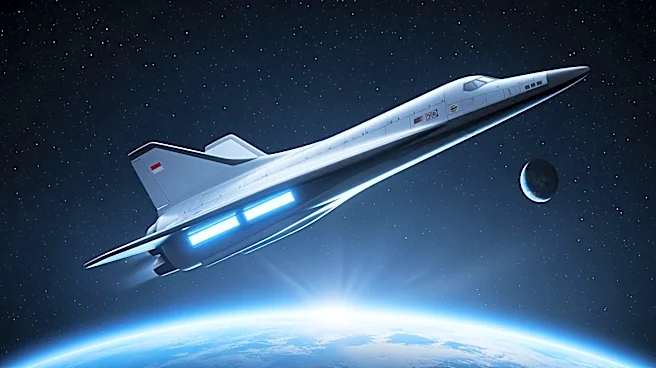
NASA's Artemis 2 mission, which involves sending astronauts around the Moon, has drawn comparisons to the Apollo 8 mission due to its timing amidst escalating tensions between President Trump and Iran. The Artemis 2 mission launched on April 1, 2026,
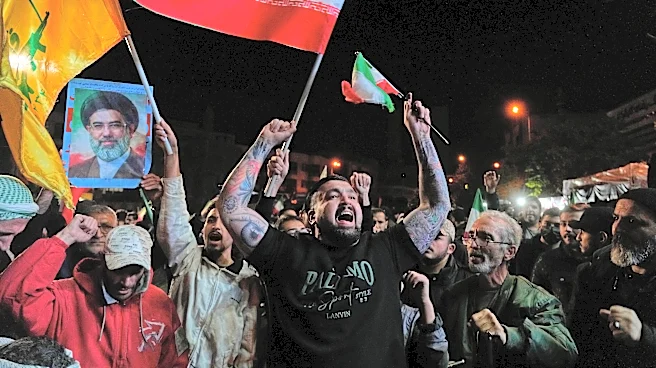
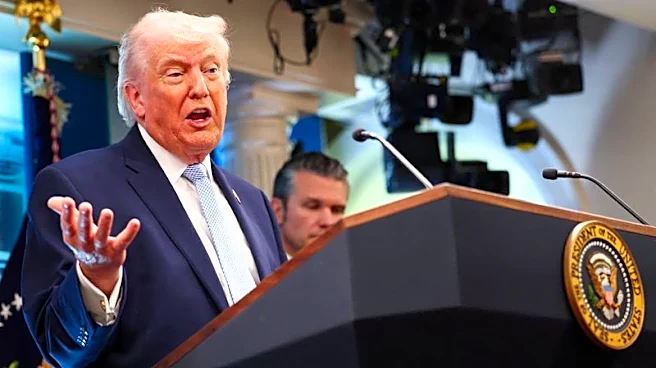
and successfully looped around the Moon on April 6, with a planned splashdown on April 10. This mission is part of NASA's efforts to test deep-space systems with astronauts aboard, paving the way for future lunar landings. Meanwhile, President Trump has issued a stark warning to Iran, threatening severe consequences if the Strait of Hormuz is not reopened by his set deadline. The conflict began on February 28, with U.S. and Israeli forces targeting Iranian military and nuclear sites, intensifying the geopolitical situation.
Why It's Important?
The Artemis 2 mission represents a significant step in NASA's Artemis program, aimed at returning humans to the Moon and eventually establishing a sustainable presence there. This mission is crucial for testing systems that will ensure the safety and success of future lunar missions. The parallel drawn between Artemis 2 and Apollo 8 highlights the role of space exploration in providing a sense of national pride and technological achievement during times of geopolitical tension. The ongoing conflict between the U.S. and Iran could have broader implications for international relations and global security, affecting diplomatic efforts and economic stability in the region.
What's Next?
As Artemis 2 prepares for its return to Earth, recovery teams are set to retrieve the crew upon splashdown off the coast of San Diego. The astronauts will undergo medical evaluations before returning to NASA's Johnson Space Center. In the geopolitical arena, the deadline set by President Trump for Iran to reopen the Strait of Hormuz looms, with potential military and diplomatic responses from both sides. The outcome of this deadline could influence future U.S. foreign policy and military strategy in the Middle East.
Beyond the Headlines
The Artemis 2 mission, while a technological milestone, also serves as a reminder of the historical context of space exploration during times of conflict. The comparison to Apollo 8 underscores the enduring impact of space missions on national morale and international perception. The current U.S.-Iran tensions may lead to shifts in alliances and power dynamics in the Middle East, with potential long-term effects on global energy markets and security frameworks.