






What's Happening?
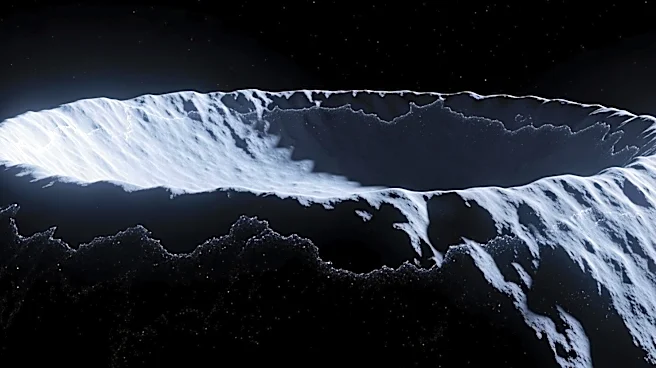
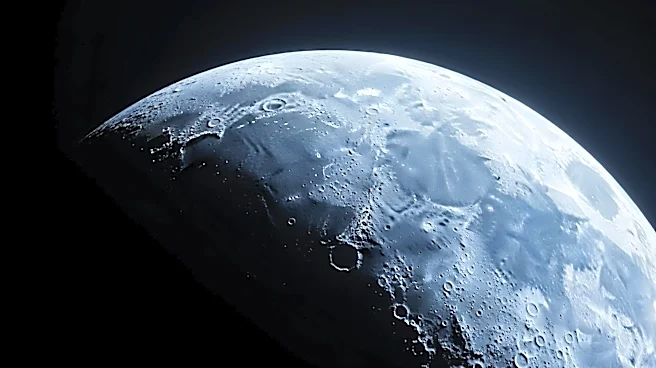
India's Chandrayaan-2 spacecraft has discovered strong evidence of ice in the Moon's south pole region, specifically in 'doubly-shadowed' craters. These craters are so deep and permanently shadowed that sunlight has never reached their floors, allowing
ice to remain frozen for billions of years. The discovery was made using radar data from the Chandrayaan-2 orbiter, which has been orbiting the Moon since 2019. The ice is located underground, not on the surface, and was identified by the Dual Frequency Synthetic Aperture Radar (DFSAR) instrument, which detects distinctive radar signatures of ice.
Why It's Important?
The presence of ice in the Moon's south pole region is crucial for future lunar exploration and potential human settlement. Water is a vital resource for sustaining life and can be used to produce rocket fuel. The discovery supports the idea that the Moon's south pole could serve as a strategic location for future lunar bases, providing a local supply of water. This finding also intensifies the competition among nations, including the U.S., China, and India, to establish a presence in this resource-rich area.
What's Next?
The findings will guide future lunar missions in identifying potential ice-bearing regions for landing and resource utilization. As nations plan their lunar exploration strategies, the Moon's south pole will likely become a focal point for scientific research and potential colonization efforts. Continued exploration and analysis of these regions will be essential to fully understand the extent and accessibility of lunar ice.