






What's Happening?
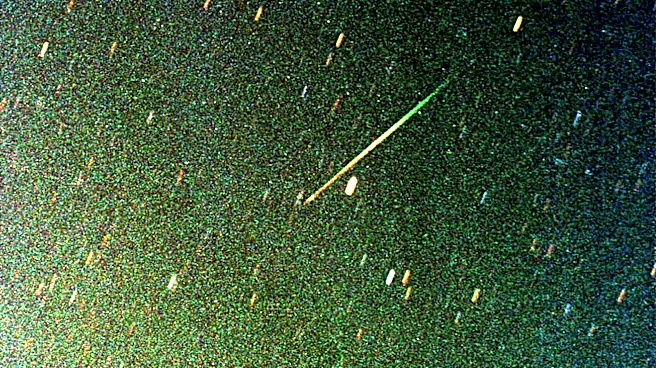
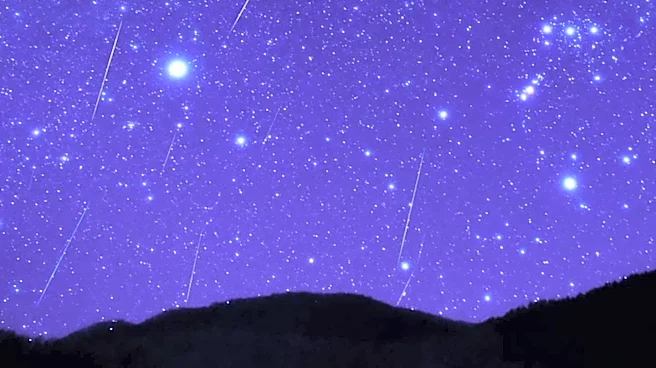
The Northern Taurid meteor shower is set to peak around November 11-12, 2026, with activity extending from November 7 through November 12. This shower is known for producing bright fireballs, despite a relatively low rate of approximately five meteors
per hour under ideal conditions, according to NASA's November skywatching guide. The American Meteor Society also lists November 11-12 as the peak period. The Southern Taurids, a related stream, already peaked around November 4-5. The timing of the Northern Taurids' peak, shortly after the new moon on November 9, ensures dark skies, which are optimal for viewing. Observers are advised to find dark locations away from light pollution, allow 30 minutes for their eyes to adjust, and look for meteors in a broad area of the sky rather than directly at the constellation Taurus, from which they appear to originate. The best viewing times are typically around midnight local time when the constellation is higher in the sky.
Why It's Important?
The Northern Taurid meteor shower offers a unique astronomical event for skygazers across the United States, particularly due to its reputation for producing exceptionally bright fireballs. While the number of meteors per hour is modest compared to other showers like the Perseids or Geminids, the visual impact of these fireballs can be significant. This event provides an opportunity for public engagement with astronomy, encouraging individuals to seek out dark-sky locations, many of which are preserved within national parks. The emphasis on dark skies also highlights the issue of light pollution and the importance of protecting natural night environments. For astronomy enthusiasts and the general public, it's a chance to witness a natural spectacle that requires no special equipment, fostering a connection with the cosmos.
What's Next?
Following the Northern Taurids, November will feature another significant astronomical event: the Leonid meteor shower, expected to peak around November 17-18. December will then bring the Geminids, which are among the most active annual meteor showers. For those interested in observing the Northern Taurids, the period from November 7 to November 12 remains viable, with the new moon ensuring dark conditions throughout. Future observations will continue to track the Taurid complex, which is linked to Comet 2P/Encke and its debris field. Astronomers will also continue to monitor for potential fireball swarms, though the next major predicted swarm is not expected until around 2032. The ongoing study of these meteor showers contributes to a deeper understanding of cometary debris and the dynamics of our solar system.
Beyond the Headlines
The Taurid meteor shower, with its two distinct streams, is part of a larger complex of debris believed to be remnants of a much larger parent body that disintegrated tens of thousands of years ago. This connection to ancient cosmic events adds a profound historical dimension to observing the shower. The phenomenon of fireballs, while visually striking, also provides valuable data for scientists studying the composition and behavior of meteoroids entering Earth's atmosphere. The collective effort to observe and document these events, from amateur stargazers to professional astronomers, contributes to a broader scientific understanding of our solar system's history and ongoing processes. The preservation of dark-sky environments, as championed by organizations like the National Park Service, is crucial not only for astronomical observation but also for ecological balance and human well-being, reminding us of the intrinsic value of an unpolluted night sky.