




What's Happening?
Médecins Sans Frontières (MSF), also known as Doctors Without Borders, is an international medical humanitarian organization established in 1971 by doctors and journalists in France. The organization delivers emergency medical assistance to populations
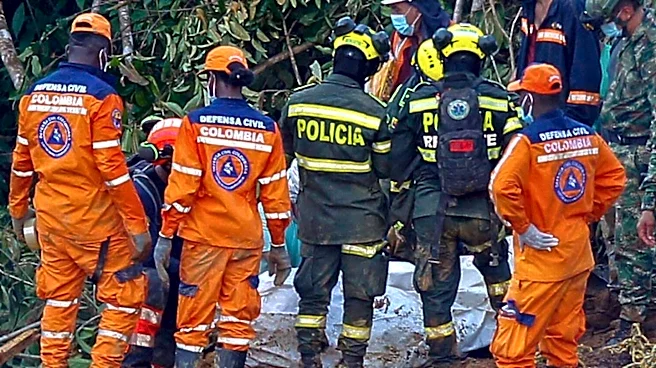
affected by armed conflicts, epidemics, natural disasters, and other crises in over 75 countries worldwide. MSF operates independently, maintaining neutrality from political, military, or religious agendas. Its primary focus is to provide care based solely on needs, advocating for independent access to victims of conflict and disaster in accordance with international humanitarian law. Annually, MSF's medical teams manage approximately 470 projects, providing care to millions of individuals. The organization employs a diverse range of professionals, including doctors, nurses, midwives, epidemiologists, and water-and-sanitation experts, all committed to assisting vulnerable populations.
Why It's Important?
The work of Doctors Without Borders is crucial for global humanitarian efforts, particularly in regions where healthcare infrastructure is compromised or non-existent due to conflict or disaster. By providing essential medical services, MSF addresses critical health needs, prevents the spread of diseases, and saves lives in some of the world's most challenging environments. Their independent and neutral stance ensures that aid reaches those most in need, irrespective of political or religious affiliations, thereby upholding fundamental humanitarian principles. The organization's advocacy for independent access to victims is vital for ensuring that international humanitarian law is respected and that aid workers can operate safely and effectively. This commitment to impartial care has earned MSF numerous accolades, including the Nobel Peace Prize, underscoring its significant impact on global public health and human rights.
What's Next?
Doctors Without Borders will continue its mission to provide medical assistance in areas of crisis, adapting its operations to emerging global challenges such as new conflicts, disease outbreaks, and natural disasters. The organization will likely persist in its advocacy efforts to ensure unhindered access to affected populations and to protect healthcare workers in conflict zones. MSF's ongoing evaluations of medical needs on the ground will guide the establishment of new programs, aiming to fill existing gaps in healthcare rather than duplicating services. This proactive approach ensures that resources are allocated efficiently to reach communities that are currently underserved. Furthermore, MSF will continue to rely on its diverse team of medical and logistical professionals to implement its projects and respond to humanitarian emergencies worldwide.
Beyond the Headlines
The work of Doctors Without Borders extends beyond immediate medical relief, influencing broader discussions on international humanitarian law, medical ethics, and global responsibility. By consistently highlighting the plight of vulnerable populations and the challenges of delivering aid in complex environments, MSF plays a significant role in shaping public opinion and pressuring international bodies and governments to uphold humanitarian principles. Their independent reporting and advocacy often shed light on neglected crises and human rights abuses, fostering greater accountability from state and non-state actors. The organization's commitment to neutrality and impartiality, even in highly politicized conflicts, sets a benchmark for humanitarian action and underscores the universal right to healthcare, irrespective of geopolitical considerations. This sustained effort contributes to a global dialogue on how best to protect and assist those caught in humanitarian emergencies.