




What's Happening?
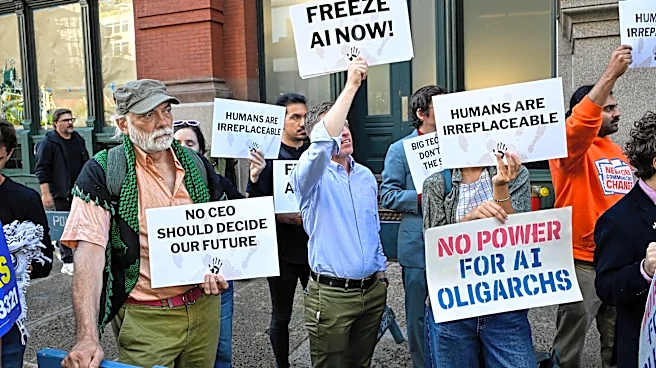
Senator Tom Cotton (R-Ark.) has formally requested that the acting Attorney General initiate an investigation and pursue charges against a network of U.S. advocacy groups. This demand stems from a recent report that, according to Senator Cotton, uncovers
a multi-year campaign of foreign influence across various vectors, specifically targeting U.S. artificial intelligence (AI) infrastructure. This action follows a letter sent by Republican members of the House Energy and Commerce Committee to the White House and FBI Director, emphasizing the critical need for the administration to seriously address any efforts to undermine U.S. AI, particularly from foreign adversaries. The broader context involves ongoing debates and concerns regarding foreign meddling in the development of data centers and AI in the United States, with some officials and reports suggesting that foreign state media and covert social accounts are amplifying opposition to data center development.
Why It's Important?
This development is significant as it highlights growing concerns within U.S. political circles about the integrity and security of the nation's AI development and infrastructure. Accusations of foreign influence on advocacy groups could lead to increased scrutiny of organizations involved in public discourse around technology and infrastructure projects. If investigations proceed and charges are brought, it could set a precedent for how the U.S. government addresses perceived foreign interference in domestic policy debates, particularly in critical technological sectors like AI. This could also impact public trust in advocacy groups and potentially lead to a chilling effect on legitimate dissent if opposition to infrastructure projects is conflated with foreign manipulation. The focus on AI underscores its strategic importance to national security and economic competitiveness, making any perceived threats to its development a high-priority issue for lawmakers.
What's Next?
Following Senator Cotton's demand, the Department of Justice will need to determine whether to launch an investigation into the alleged foreign influence on U.S. advocacy groups. This decision could lead to a formal inquiry, potentially involving intelligence agencies and law enforcement. If an investigation is initiated, it could result in legal actions against individuals or organizations found to be acting as unregistered foreign agents or engaging in other illicit activities. This situation may also prompt further legislative efforts to enhance oversight and regulation of foreign lobbying and influence campaigns in the U.S. The outcome could influence public perception of AI development and data center projects, potentially leading to more stringent public consultation processes or increased security measures for critical infrastructure. Additionally, the issue may become a point of contention in upcoming political discussions and elections, particularly as the U.S. continues to prioritize its leadership in AI.
Beyond the Headlines
The call for an investigation into foreign influence on AI advocacy groups touches upon deeper implications concerning the balance between national security, free speech, and the right to protest. The narrative of foreign interference, while potentially valid in some instances, can also be used to delegitimize domestic opposition to government or corporate initiatives. This raises questions about how to distinguish genuine grassroots movements from those potentially manipulated by external actors. The focus on 'narrative threats' and the development of tools to counter them, as mentioned in the broader context of the source, suggests a growing trend towards managing public discourse, which could have significant implications for civil liberties and democratic processes. The long-term impact could be a shift in how the U.S. government and corporations engage with public dissent, potentially leading to a more securitized approach to policy debates in critical sectors.