



What's Happening?
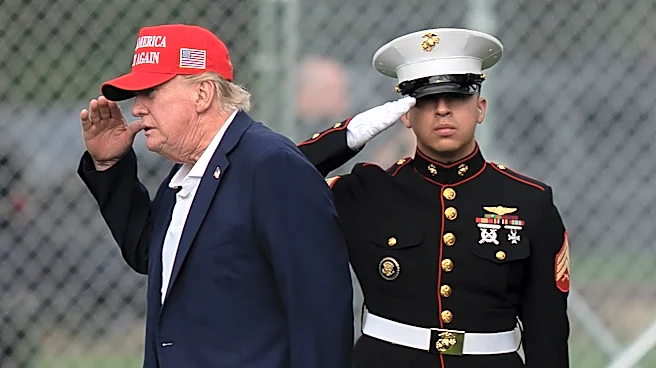
President Trump is facing increasing pressure regarding the ongoing conflict in Iran, with concerns that it could define his presidency and impact his approval ratings ahead of midterm elections. The President had previously assured conservative influencer
Tucker Carlson that the situation would resolve positively. Additionally, Trump's executive assistant, Natalie Harp, has been thrust into the spotlight after Georgia Senator John Ossoff accused the President of neglecting his duties to 'travel with Natalie' on Air Force One. This comment has provoked a strong reaction from the White House, highlighting the scrutiny surrounding the President's actions and his administration. The situation is further complicated by reports of President Trump threatening U.S. allies Oman and South Korea, leading to questions about his strategic approach to the conflict and his overall stability.
Why It's Important?
The ongoing Iran conflict and the associated political fallout are significant for several reasons. Domestically, President Trump's low popularity ratings and the approaching midterm elections mean that the handling of this international crisis could directly influence the political landscape. Public perception of the President's leadership during a time of international tension can sway voter sentiment and impact the balance of power in Congress. The controversy surrounding Natalie Harp, while seemingly personal, also reflects broader concerns about the President's focus and priorities. Allegations of neglecting official duties, even if disputed, can erode public trust and provide ammunition for political opponents. Internationally, threatening allies like Oman and South Korea could destabilize existing alliances and undermine U.S. diplomatic efforts, potentially leading to a more isolated and less influential America on the global stage. This could have long-term implications for U.S. foreign policy and national security.
What's Next?
The immediate future will likely see continued political debate and media scrutiny surrounding President Trump's handling of the Iran conflict and the allegations concerning Natalie Harp. With midterm elections approaching, Democratic lawmakers are expected to continue pressing these issues, aiming to capitalize on any perceived weaknesses in the administration. The White House will likely continue to defend the President's actions and dismiss criticisms as politically motivated. It remains to be seen whether President Trump will adjust his strategy regarding Iran or his public engagements in response to the mounting pressure. The impact of these events on his approval ratings and the upcoming elections will be closely watched, as will any further developments in the Iran conflict and U.S. relations with its allies. The situation could escalate or de-escalate depending on diplomatic efforts and military actions.
Beyond the Headlines
Beyond the immediate political implications, this situation highlights several deeper issues. The role of personal relationships and perceived distractions within the highest levels of government can raise ethical questions about accountability and the proper use of presidential power and resources. The intense media focus on an aide like Natalie Harp, even if driven by political commentary, underscores the constant public and political scrutiny faced by those in proximity to the President. Furthermore, the President's reported threats to allies could signal a shift in U.S. foreign policy away from traditional alliances and towards a more unilateral approach. This could have profound long-term consequences for global stability and the international order, potentially leading to a realignment of geopolitical power. The narrative surrounding the Iran conflict also touches upon the challenge of extricating a nation from military engagements once they have begun, and the lasting impact such conflicts can have on a presidency and a nation's legacy.