








What's Happening?
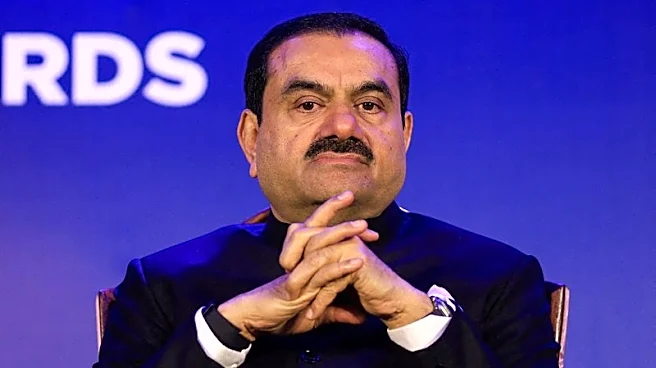
The top federal prosecutor in Brooklyn, Joseph Nocella Jr., has stated he will not dispute the U.S. Department of Justice's (DOJ) decision to drop the prosecution of Indian billionaire Gautam Adani. The case involved allegations of fraud and bribery,
with Adani accused of agreeing to pay $265 million in bribes to Indian government officials to facilitate the development of a solar power plant by his company, Adani Green Energy. Nocella clarified that he was not the decision-maker in dropping the case and had no reason to believe that the reasons provided by his supervisor, Trent McCotter, were not genuine. McCotter cited the foreign nature of the case and suggested that the DOJ under former President Joe Biden might have left a complex case for their successors. Adani, who has denied any wrongdoing, had previously offered to invest $10 billion in the U.S. as part of a potential settlement.
Why It's Important?
The decision to drop the case against Gautam Adani highlights the complexities and challenges of prosecuting international business figures in U.S. courts. It raises questions about the U.S. role in policing global business practices and the potential diplomatic implications of such cases. The case's dismissal may impact perceptions of the U.S. justice system's ability to handle high-profile international cases, especially those involving significant economic and political figures. Additionally, the involvement of Adani, a major player in the global energy sector, underscores the intersection of international business interests and legal accountability. The decision may also influence future DOJ strategies in handling similar cases, potentially affecting how international business operations are scrutinized and regulated.
What's Next?
While the criminal case has been dismissed, Adani and his nephew have agreed to pay $18 million to resolve a related Securities and Exchange Commission (SEC) case. Adani Enterprises will also pay $275 million to settle a Treasury Department probe. These settlements indicate ongoing regulatory scrutiny and potential financial implications for Adani's business operations. The case's resolution may prompt further discussions on the U.S. approach to international business regulation and the balance between legal accountability and diplomatic relations. Observers will likely watch for any changes in DOJ policies or strategies regarding international cases, as well as any potential impacts on U.S.-India business relations.