



What's Happening?
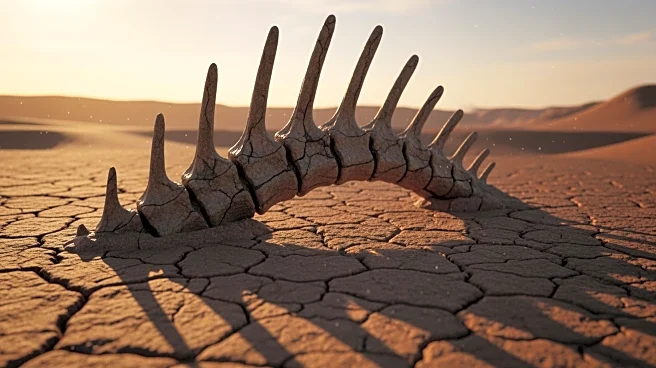
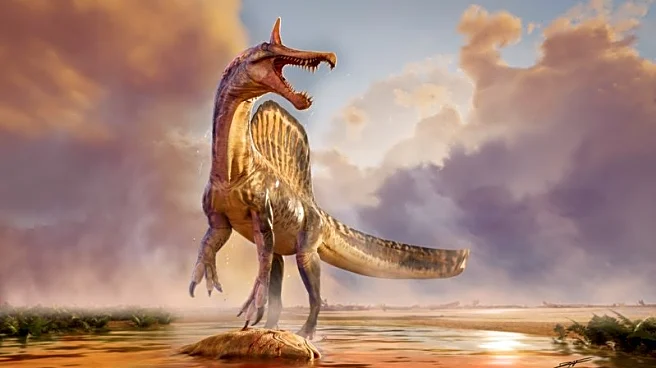
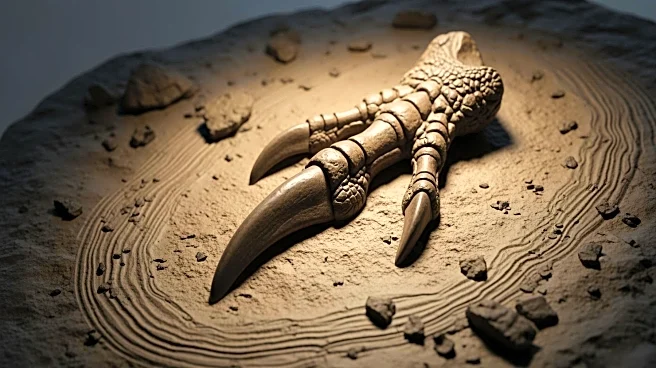
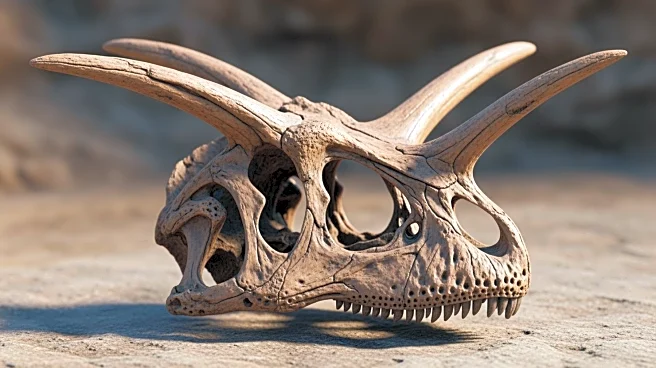
A team of fossil hunters has uncovered a new species of Spinosaurus, named Spinosaurus mirabilis, during an expedition in Niger. The discovery, published in the journal Science, includes a skull with a distinctive swordlike horn protruding from its head.
This new species was found to have a unique dental arrangement, with lower jaw teeth jutting out between the upper set, a feature previously thought to be exclusive to other prehistoric creatures. The fossils were located deep inland, suggesting that this Spinosaurus species lived in forested regions with rivers, challenging the previous belief that Spinosaurids were coastal hunters.
Why It's Important?
The discovery of Spinosaurus mirabilis provides significant insights into the diversity and adaptability of Spinosaurids. By finding these fossils inland, researchers are prompted to reconsider the ecological niches occupied by these dinosaurs, which could lead to a better understanding of prehistoric ecosystems. This finding also highlights the potential for new discoveries in regions previously thought to be well-explored, encouraging further paleontological research. The unique features of this species, such as its dental arrangement and skull structure, contribute to the broader knowledge of dinosaur evolution and their varied adaptations.
What's Next?
Researchers plan to conduct further studies to understand the habitat and lifestyle of Spinosaurus mirabilis during the Cretaceous period. This could involve more detailed analysis of the surrounding geological formations and fossilized flora and fauna to reconstruct the environment in which this dinosaur lived. Additionally, the team may explore other regions in Africa for similar fossils, which could provide more evidence of the inland habitats of Spinosaurids. These efforts could lead to new theories about dinosaur distribution and behavior, potentially reshaping current scientific narratives.
Beyond the Headlines
The discovery of Spinosaurus mirabilis raises questions about the adaptability of dinosaurs to different environments, suggesting that they may have been more versatile than previously thought. This could have implications for understanding how modern animals might adapt to changing climates and environments. Furthermore, the emotional response of the research team highlights the human element in scientific discovery, emphasizing the passion and dedication involved in paleontological research. This find also underscores the importance of interdisciplinary collaboration in uncovering and interpreting complex historical data.