






What's Happening?
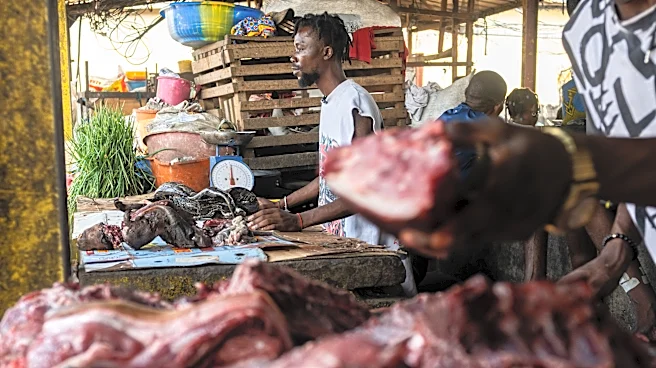
In the Democratic Republic of Congo, a significant Ebola outbreak has been linked to the consumption of wild meat, a staple in the local diet. The outbreak, which has resulted in over 1,000 suspected cases and at least 220 deaths, is believed to have
originated from the handling and consumption of infected animals, such as fruit bats and monkeys. These animals are often hunted and sold in markets, despite the known risks of zoonotic diseases like Ebola. The Congo Basin, rich in wildlife, is a primary source of this wild meat, which is deeply embedded in the cultural practices of the region. The current outbreak is exacerbated by the region's ongoing armed conflicts and displacement of people, complicating efforts to control the virus's spread.
Why It's Important?
The outbreak highlights the critical intersection of cultural practices and public health risks. The consumption of wild meat, while culturally significant, poses a substantial risk of zoonotic disease transmission, as seen with Ebola. This situation underscores the need for effective public health education and intervention strategies to mitigate such risks. The outbreak also poses a threat to global health security, as Ebola can spread rapidly and has high mortality rates. The situation in Congo serves as a reminder of the importance of monitoring and controlling wildlife trade and consumption to prevent future outbreaks. Additionally, the outbreak's impact on local communities, already burdened by conflict, could lead to further destabilization and humanitarian challenges.
What's Next?
Efforts to control the outbreak will likely focus on public health education to change consumption habits and improve understanding of the risks associated with wild meat. International health organizations may increase support to the region to contain the virus and prevent its spread. There may also be calls for stricter enforcement of wildlife trade regulations to reduce the risk of future outbreaks. The ongoing conflict in the region presents a significant challenge to these efforts, as it hampers access to affected areas and complicates the delivery of aid and medical supplies. The international community may need to provide additional resources and support to address these challenges effectively.
Beyond the Headlines
The outbreak raises broader questions about the sustainability of wildlife consumption and its impact on biodiversity. The Congo Basin, a critical carbon sink, faces pressure from both legal and illegal wildlife trade, threatening its ecological balance. This situation highlights the need for integrated approaches that consider both conservation and public health. The cultural significance of wild meat consumption also points to the need for culturally sensitive interventions that respect local traditions while promoting health and safety. Long-term solutions may involve developing alternative sources of protein and livelihoods to reduce reliance on wild meat.