



What's Happening?
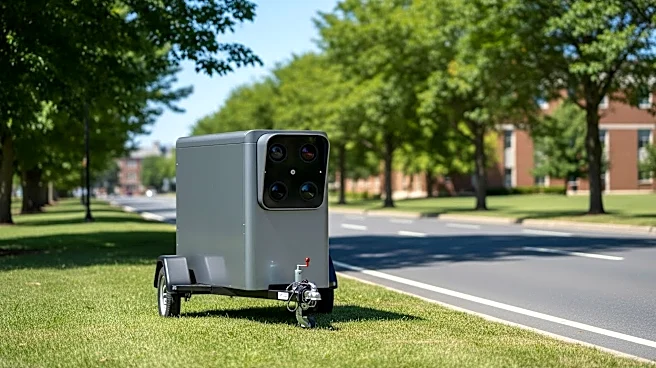
Newark police are issuing a warning to incoming and returning University of Delaware students about the city's roving speed camera. The camera, which began operation on March 24, has been moved from its initial location on Hillside Road to Capitol Trail,
northeast of Main Street. It will continue to rotate among 15 pre-approved locations throughout the city. The police department's reminder, issued on August 18, comes just days before students and their families arrive for the University of Delaware's move-in weekend. The primary objective of the automated speed enforcement program is to achieve compliance with speed limits, not merely to issue citations, aiming to enhance road safety for all residents, pedestrians, bicyclists, students, and visitors. Violations are issued for exceeding the speed limit by at least 11 miles per hour, and failure to pay can result in a suspended driver's license. Any revenue generated by the camera is allocated to cover its operational costs, with any surplus directed to the Delaware Office of Highway Safety.
Why It's Important?
The implementation and active enforcement of roving speed cameras in Newark carry significant implications for both the local community and the large student population of the University of Delaware. For students, particularly those new to the area, this serves as a crucial alert to adjust their driving habits and be aware of varying enforcement locations, potentially preventing costly fines and license suspensions. For the city, the program aims to improve road safety, a critical concern in areas with high pedestrian and vehicular traffic, especially during academic terms. The revenue allocation model, where funds primarily cover operational costs and then support highway safety, indicates a focus on public welfare rather than pure revenue generation. This initiative reflects a broader trend in urban areas utilizing technology to manage traffic and enhance safety, impacting daily commutes and local driving culture. The success of the program hinges on driver awareness and adherence to speed limits, directly affecting accident rates and pedestrian safety.
What's Next?
As the University of Delaware's move-in weekend approaches, students and their families should expect increased vigilance from Newark police regarding speed limit enforcement. The roving nature of the camera means drivers will need to remain aware of their speed across various city locations, rather than just fixed points. The city will likely continue its public awareness campaigns to ensure all drivers, including the transient student population, are informed about the speed camera program and its objectives. The effectiveness of the program will be continuously monitored through citation data and accident statistics. Future decisions regarding the camera's deployment, potential expansion, or adjustments to enforcement policies will likely be based on these metrics and ongoing community feedback. Drivers should anticipate that the camera will continue to move among the 15 pre-approved locations, requiring consistent adherence to posted speed limits.
Beyond the Headlines
The Newark speed camera initiative touches upon deeper discussions regarding the balance between public safety, individual liberty, and the role of technology in urban governance. While the stated goal is compliance and safety, automated enforcement systems often spark debates about surveillance, privacy, and the potential for disproportionate impacts on certain demographics. For a university town, the constant influx of new drivers, many of whom are young and unfamiliar with local regulations, presents a unique challenge. This program could be seen as an educational tool, albeit one with financial penalties, to instill safer driving habits. It also highlights the evolving landscape of traffic enforcement, moving from traditional police patrols to more automated, data-driven approaches. The long-term cultural shift in driving behavior, if successful, could lead to a safer urban environment, but it also necessitates ongoing transparency and public trust in the technology and its implementation.