


What's Happening?
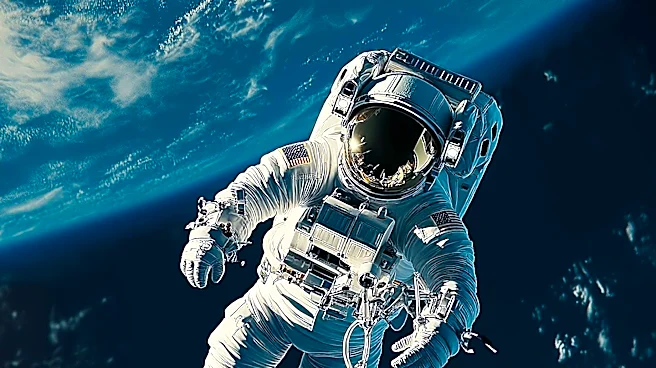
Astronauts in space experience significant disruptions to their circadian rhythms due to the unique environment of spaceflight. Unlike on Earth, where the sun provides a reliable 24-hour cycle, spacecraft orbit Earth every 90 minutes, leading to approximately
16 sunrises and sunsets daily. This rapid succession of light and darkness disorients the body's internal clock, which relies heavily on light signals to synchronize sleep and wakefulness. While astronauts are allotted around eight and a half hours for sleep, research indicates they typically achieve only six to six and a half hours. This chronic sleep restriction has been linked to measurable reductions in vigilant attention, a critical cognitive function for mission safety. The challenge lies in managing these biological systems in an environment where natural cues are absent, making sleep not just a comfort issue but a vital component of operational safety.
Why It's Important?
The disruption of circadian rhythms in astronauts has profound implications for mission safety and the overall success of space exploration. Reduced vigilant attention, a direct consequence of chronic sleep restriction, can lead to critical errors in an environment where a missed signal or delayed response could have severe consequences. This issue highlights the complex interplay between human biology and the extreme conditions of space, underscoring the need for advanced strategies to maintain astronaut health and performance. The findings from space travel also offer valuable insights into understanding and mitigating circadian rhythm disruptions on Earth, such as those experienced by shift workers or individuals with jet lag. The research emphasizes that feeling tired and being biologically ready for sleep are not always the same, a distinction that is crucial for optimizing human performance in demanding environments.
What's Next?
Future efforts in space exploration will likely focus on developing more effective countermeasures to mitigate circadian rhythm disruption and sleep loss in astronauts. This could involve refining artificial lighting systems to better mimic Earth's natural light cycles, optimizing astronaut schedules for exercise and meals, and implementing personalized sleep strategies. Research in chronobiology and sleep science will continue to explore how to best guide astronaut routines to offset the negative effects of sleep deprivation. The ongoing challenge is to balance the need for alertness during waking hours with the necessity of promoting restorative sleep, especially as missions become longer and more complex. The insights gained from these efforts will not only benefit space travelers but also contribute to a broader understanding of human sleep and circadian biology, potentially leading to improved health outcomes for individuals on Earth facing similar challenges.
Beyond the Headlines
The challenges faced by astronauts in maintaining synchronized circadian rhythms in space underscore a fundamental aspect of human biology: our deep connection to Earth's natural cycles. This issue extends beyond the immediate concerns of mission safety, touching upon the ethical considerations of long-duration space travel and the potential for irreversible physiological changes. The reliance on artificial light and carefully constructed schedules to manage biological rhythms in space highlights the artificiality of the environment and the constant effort required to sustain human life beyond Earth. This situation prompts deeper questions about the long-term adaptability of the human body to extraterrestrial environments and the psychological impact of living in a perpetually altered temporal reality. The lessons learned from space travel could also inform the design of future habitats, both on Earth and in space, emphasizing the importance of integrating natural light and environmental cues to support human well-being.