







What's Happening?
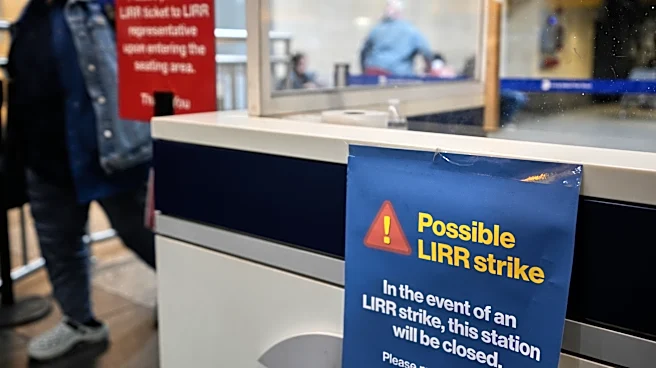
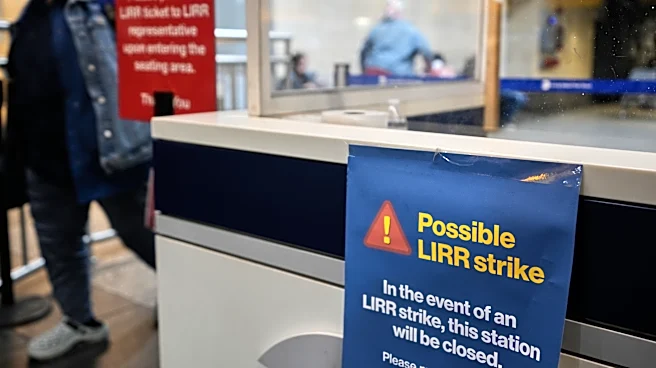
The Long Island Rail Road (LIRR) is facing a potential strike that could disrupt service for hundreds of thousands of commuters. Last-minute negotiations are underway to avert the strike, which would significantly impact daily travel for many in the New
York area. The LIRR is a critical component of the region's transportation infrastructure, and a strike would halt its operations, leaving commuters to seek alternative means of transportation. The negotiations are crucial as they aim to resolve disputes that could lead to a work stoppage, affecting not only the commuters but also the broader economic activities dependent on the rail service.
Why It's Important?
The potential strike of the LIRR is significant due to its impact on the daily lives of commuters and the regional economy. The LIRR serves as a vital link for many who travel to and from New York City for work, education, and other activities. A disruption in service could lead to increased traffic congestion, longer commute times, and economic losses for businesses that rely on the timely arrival of employees and goods. The negotiations are critical in preventing these adverse effects and ensuring the continuity of service, which is essential for maintaining the economic vitality of the region.
What's Next?
If the negotiations fail, the LIRR could face a strike, leading to a complete halt in service. This would necessitate the implementation of contingency plans by both the rail service and commuters. Alternative transportation options, such as buses and carpooling, would need to be organized to accommodate the displaced commuters. Additionally, there could be increased pressure on local government and transportation authorities to find a swift resolution to the dispute to minimize disruption. The outcome of the negotiations will be closely watched by stakeholders, including commuters, businesses, and policymakers.