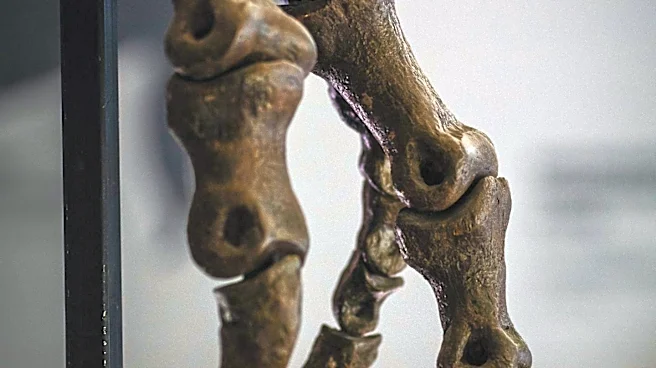








What's Happening?
A study led by Charles Sturt University researchers has uncovered evidence from 3,500-year-old skeletons in Vietnam that challenges long-held beliefs about syphilis transmission. The skeletal remains of children suggest that treponemal diseases, which
include syphilis, may have been transmitted from mother to child thousands of years ago. This finding contradicts the assumption that congenital transmission is a definitive indicator of venereal syphilis. The study indicates that other treponemal diseases, such as yaws, may also have been spread this way, prompting a reevaluation of how ancient diseases are identified.
Why It's Important?
The discovery has significant implications for the understanding of syphilis's origins and the history of treponemal diseases. It challenges the narrative that syphilis was present outside the Americas before European contact, suggesting that congenital transmission may not be exclusive to venereal syphilis. This could lead to a reassessment of historical interpretations of skeletal evidence and the evolution of infectious diseases. The findings also highlight the complexity of treponemal diseases and their impact on human history, emphasizing the need for further research into their transmission and evolution.
What's Next?
The study's findings may prompt further research into the evolutionary history of treponemal diseases and their transmission patterns. Researchers may explore new methodologies for identifying ancient diseases, considering the limitations of current genetic evidence. The study also raises ethical considerations regarding the analysis of ancient human remains, particularly in tropical regions where DNA preservation is challenging. Future research may focus on collaborating with local communities to ensure ethical standards are upheld in the study of ancient diseases.