




What's Happening?
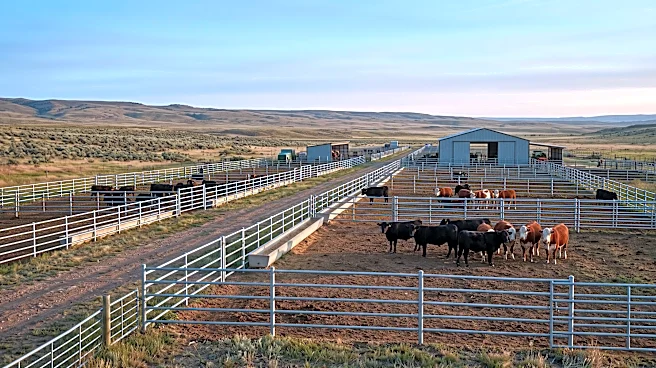
Namibia has implemented a nationwide suspension on the movement, import, and export of cloven-hoofed animals and their products. This decisive action follows the detection of Foot-and-Mouth Disease (FMD) within the country's previously FMD-free zone.
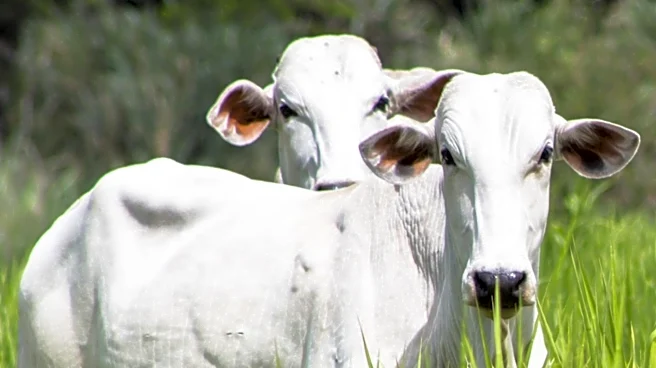
Ten out of eleven samples collected from cattle in the Karasburg State Veterinary District tested positive for the disease. The suspension impacts cattle, sheep, goats, pigs, and game, as well as associated products like meat, hides, and dairy. This measure, enacted by the Directorate of Veterinary Services, aims to contain the outbreak and prevent further spread. The government emphasizes that compliance with these restrictions is crucial for effective disease control, despite the anticipated financial consequences for farmers, transporters, abattoirs, and rural households dependent on livestock.
Why It's Important?
The FMD outbreak in Namibia's disease-free zone poses a significant threat to the country's livestock industry, which is a vital component of its national economy. Namibia has invested decades in building a robust livestock sector capable of accessing demanding international markets, a reputation heavily reliant on credible animal-health controls. A widespread FMD outbreak could severely compromise this market access and international trading position, leading to substantial economic losses. The industry supports employment, rural incomes, and various related businesses, including transport, veterinary services, abattoirs, processors, retailers, and exporters. Damage to this sector would have far-reaching implications, particularly in regions with limited alternative industries. The situation highlights the critical balance between economic activity and stringent disease control measures to protect a national asset.
What's Next?
The immediate priority for Namibia is the containment of the FMD outbreak. The government is expected to maintain and enforce movement restrictions on cloven-hoofed animals and their products. There is a call from the Namibia Agricultural Union to consider declaring a state of emergency, which the government is urged to evaluate objectively to ensure sufficient resources, personnel, testing capacity, surveillance, and financial support are available for rapid containment. The government is also tasked with communicating honestly and providing regular updates to Namibians, clear instructions to farmers, and predictable information to businesses. Furthermore, once the immediate crisis is contained, Namibia is expected to undertake an evidence-based examination of its entire livestock disease-control architecture, including the future of the veterinary cordon fence, to learn from this event and improve future preparedness.
Beyond the Headlines
The FMD outbreak in Namibia underscores the complex interplay between veterinary science, economic policy, and political considerations. While the immediate focus is on disease containment, the incident has reignited debates surrounding the country's veterinary cordon fence, known as the 'redline.' This fence has historically separated livestock economies, and its future is a subject of ongoing national discussion. The current crisis highlights that disease control measures must be based on scientific evidence and economic analysis, rather than political rhetoric or historical grievances. The long-term implications could involve a re-evaluation of Namibia's biosecurity protocols, vaccination strategies, and surveillance technology to strengthen its resilience against future outbreaks. The incident also emphasizes the collective responsibility of farmers, transporters, and the public in adhering to biosecurity measures to protect a national economic asset.