




What's Happening?
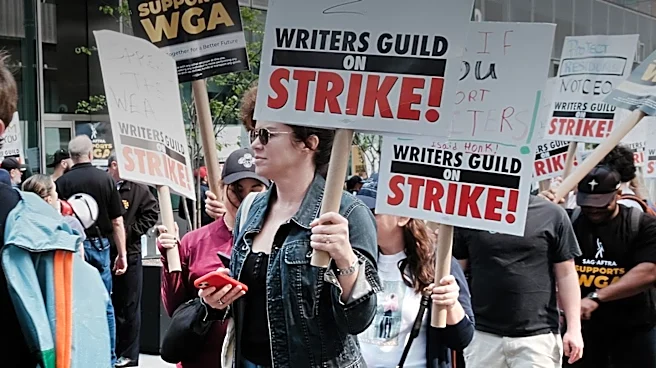
Students in Quebec are mobilizing, with a protest in Montreal drawing between 2,000 and 5,000 participants, culminating a week of student strikes across various CEGEPs and universities. The Coalition de résistance pour l’unité étudiante syndicale (CRUES),
representing 13 student associations, reported nearly 100,000 students covered by the strike mandate. Elki Mercier, spokesperson for CRUES, is advocating for an 'unlimited general strike in 2027,' demanding increased financial assistance, the exclusion of parental contributions from aid calculations, and expanded eligibility for international students. Protesters also seek more funding for educational institutions to renovate infrastructure, hire staff, and build affordable student housing. The demonstrations follow similar protests in Ontario regarding cuts to the OSAP student grant program. Data from Quebec’s ministry of higher education indicates that recipients of student financial assistance received an average of $9,601 in loans and bursaries during the 2023–2024 school year, which CRUES deems insufficient given the rising cost of living. The Montreal protest, initially peaceful, turned chaotic when a stone was thrown at riot police, leading to police intervention with violence and tear gas, resulting in eight acts of mischief and three arrests.
Why It's Important?
The student protests in Quebec highlight a growing concern over the affordability of higher education and the financial precarity faced by students in Canada. The call for a general strike in 2027 signifies a long-term commitment to systemic change, potentially disrupting the educational landscape if demands are not met. The issues raised, such as the inadequacy of financial aid, the impact of parental contributions on eligibility, and the need for paid internships, reflect broader socio-economic challenges affecting young people. The involvement of international students in these demands also points to a wider recognition of their role and needs within the Canadian education system. The violent turn of the Montreal protest underscores the intensity of student frustration and the potential for further clashes if government and institutional responses are perceived as insufficient. This movement could influence policy decisions regarding student financial aid, university funding, and the overall accessibility of education, impacting current and future generations of students across Canada.
What's Next?
The student movement is set to continue with a special congress organized by CRUES at Université du Québec à Montréal (UQAM) on November 21. During this congress, members of affiliated student associations will debrief on the recent events and discuss the feasibility of launching an unlimited general strike in the winter of 2027. CRUES has set a target of 60,000 participating students to initiate this strike. Quebec Minister of Higher Education Elsie Lefebvre and Minister of Domestic Security Guy Lapointe Jr. have acknowledged students' right to mobilize while condemning vandalism. Ms. Lefebvre previously committed to funding certain mandatory internships in the public sector, though specific implementation dates were not provided. The outcome of the upcoming congress and the government's subsequent actions will determine the trajectory of this student movement and whether a large-scale strike materializes, potentially leading to significant disruptions in the Canadian education system.
Beyond the Headlines
The current student mobilization in Quebec, fourteen years after the 'Maple Spring' of 2012, signals a shift in the drivers of student activism. While the 2012 protests were primarily sparked by tuition fee increases, the present movement is rooted in the broader issues of living and study conditions, reflecting an unsustainable level of precarity among young people. This suggests a deeper societal problem where the cost of living and the structure of financial aid are failing to keep pace with economic realities. The demand for paid mandatory internships, as highlighted by a social work student, points to the exploitation of student labor and the need for policy changes that recognize the value of such work. The reported food insecurity among a significant percentage of Quebec students further illustrates the severe financial strain. This movement could catalyze a re-evaluation of the social contract surrounding higher education, pushing for a model where education is not only accessible but also sustainable for students, potentially influencing similar discussions in other developed nations.