
What's Happening?
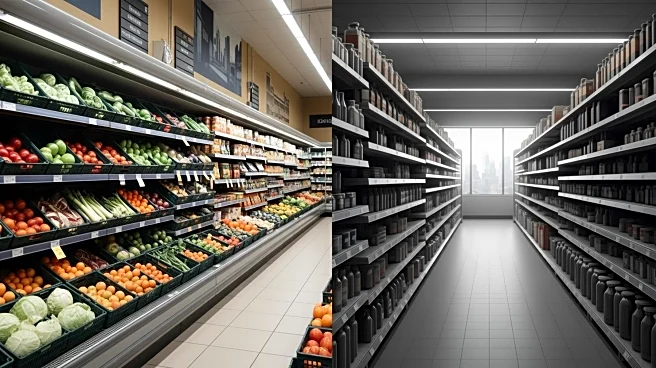
A letter to the editor in the Los Angeles Times highlights the stark economic disparities evident in the grocery store landscape of Los Angeles. The letter contrasts the abundance of high-end grocery options
in affluent areas like Beverly Hills, which boasts stores such as Ralphs, Gelson’s, Bristol Farms, Trader Joe’s, and Pavilions, with the limited and understocked options available in South Los Angeles neighborhoods. The writer, Randy Farhi, points out that in his South L.A. neighborhood, the nearest Ralphs is a mile away and often has items under lock and key, reflecting a broader issue of economic inequality in access to quality food and retail services.
Why It's Important?
This disparity in grocery store availability and quality underscores a significant issue of economic inequality within urban areas. Access to quality food is a fundamental aspect of living standards and public health. The situation described in Los Angeles is a microcosm of a larger national issue where wealthier neighborhoods enjoy better services and amenities, while less affluent areas face neglect. This can lead to a cycle of poverty and health issues, as residents in underserved areas may have limited access to fresh and healthy food options. Addressing these disparities is crucial for fostering equitable urban development and improving the quality of life for all residents.