


What's Happening?
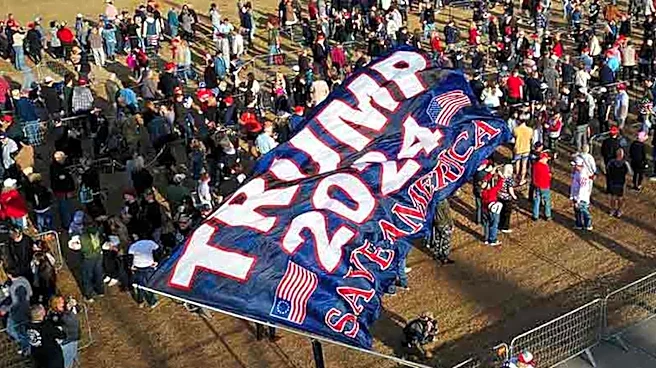
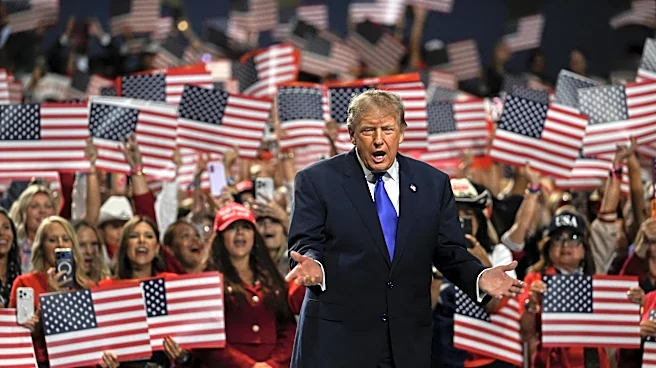
President Trump has organized a convention aimed at energizing the Republican base in anticipation of the upcoming midterm elections. However, a significant number of Republican officials who are seeking re-election have opted not to attend the event.
Instead, these officials have chosen to focus their efforts on local campaign activities within their respective districts. This decision by numerous Republican candidates suggests a potential reluctance to be closely associated with President Trump at this specific juncture, as the midterm elections approach. The convention was intended to rally support and enthusiasm among Republican voters, but the absence of many candidates indicates a strategic shift in their campaign approaches.
Why It's Important?
The apparent avoidance of President Trump's convention by Republican candidates carries significant implications for the party's strategy and public perception leading into the midterm elections. This distancing could signal concerns among candidates that President Trump's current popularity might negatively impact their own electoral prospects. By campaigning locally rather than attending the national event, these officials may be attempting to appeal to a broader range of voters, including those who might be less enthusiastic about President Trump. This trend could also reflect internal divisions or strategic disagreements within the Republican party regarding the most effective way to secure victories in the upcoming elections. The success or failure of this strategy will likely influence future campaign approaches and the role of presidential endorsements in midterm cycles.
What's Next?
The immediate aftermath of the convention and the performance of Republican candidates in the midterm elections will be crucial in determining the long-term impact of this strategic distancing. If candidates who avoided the convention perform well, it could encourage more Republicans to adopt similar independent campaign strategies in future elections, potentially diminishing the perceived necessity of direct association with the presidential figure. Conversely, if their performance is poor, it might lead to a re-evaluation of this approach. Political analysts will closely observe voter turnout and election results to assess whether the absence of these officials from President Trump's event had a discernible effect on their campaigns or the overall Republican performance. The outcome could reshape the dynamics of party unity and campaign messaging for future election cycles.
Beyond the Headlines
This development highlights a deeper tension within the Republican party regarding the balance between party loyalty and individual candidate viability. The decision by numerous officials to prioritize local campaigning over a national event with President Trump suggests a pragmatic assessment of their electoral chances. It raises questions about the evolving nature of political endorsements and the potential for a more decentralized campaign approach in an era of shifting public opinion. This trend could also indicate a growing desire among some Republican politicians to cultivate their own distinct political identities, rather than being solely defined by their association with the party's national leader. Such a shift could have long-term implications for party cohesion and the influence of presidential figures in future elections.