
What's Happening?
The South Wales Metro network is nearing full electrification, with 99% of the system now electrified. This development is expected to alleviate the long queues that form after major events in Cardiff,
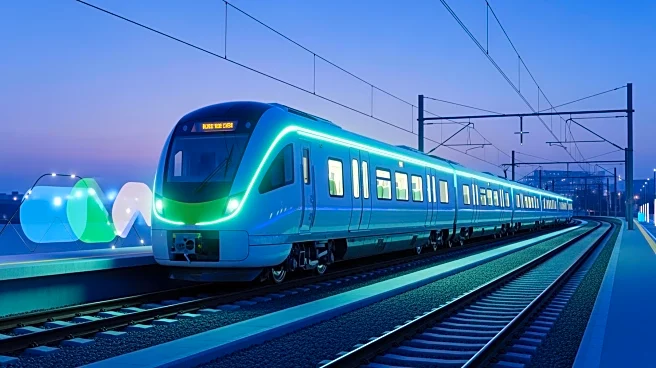
such as rugby internationals and concerts. The introduction of tri-mode trains, which can operate on electric, battery, and diesel power, is a key component of this upgrade. These trains have been deployed on the Rhymney Valley Line, and the Cardiff Bay section is set to be electrified by early 2026. Transport for Wales (TfW) anticipates that the new trains will increase capacity and reduce waiting times at Cardiff Central station, improving the flow of passengers after large events. The project, costing £1 billion, aims to provide more frequent services and increased capacity, with 12 trains per hour expected to pass through Pontypridd by 2026.
Why It's Important?
The electrification of the South Wales Metro is significant for several reasons. It represents a major investment in public transportation infrastructure, which is expected to enhance the efficiency and reliability of train services in the region. This is particularly important for Cardiff, a city that hosts numerous large-scale events, drawing tens of thousands of visitors. By improving the capacity and frequency of train services, the project aims to reduce congestion and waiting times, thereby enhancing the overall experience for event-goers and daily commuters alike. Additionally, the shift towards electric trains aligns with broader environmental goals by reducing reliance on diesel and lowering emissions.
What's Next?
As the electrification project progresses, the focus will be on completing the remaining sections, particularly the Cardiff Bay area. Once fully operational, the new train services are expected to significantly improve the transportation network in South Wales. Stakeholders, including Transport for Wales and local government officials, will likely monitor the impact of these changes on passenger numbers and satisfaction. There may also be further discussions on expanding electrification to other regions, as well as addressing any remaining challenges, such as the need for late-night services.
Beyond the Headlines
The electrification of the South Wales Metro could have broader implications beyond immediate transportation improvements. It may serve as a model for other regions in the UK looking to modernize their rail networks. The project also highlights the ongoing challenges of balancing technological advancements with practical considerations, such as the continued use of diesel in tri-mode trains. This development underscores the importance of strategic planning in public infrastructure projects to maximize benefits and minimize environmental impact.