







What's Happening?
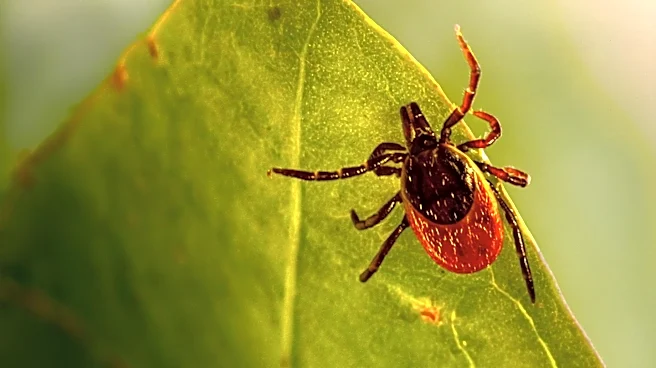
The Powassan virus, a tick-borne illness first identified in 1958, is experiencing a surge in the northeastern United States, particularly in New England. This virus, primarily spread by blacklegged ticks, has been diagnosed in 76 Americans in 2025, marking
a record annual count. The virus is known for its neuroinvasive nature, affecting the brain and nervous system, and can be fatal in 10% to 15% of symptomatic cases. The increase in Powassan virus cases is part of a broader trend of rising tick-borne illnesses in the U.S., attributed to factors such as growing deer populations, suburban development, and warmer winters. These conditions allow ticks and their animal hosts to persist and remain active longer each year.
Why It's Important?
The rise in Powassan virus cases highlights a significant public health concern, as tick-borne illnesses are altering daily life in parts of the United States. The virus's ability to transmit quickly and its severe health implications make it a critical issue for healthcare providers and public health officials. The increase in cases underscores the need for effective prevention strategies and public awareness campaigns to mitigate the risk of infection. The situation also emphasizes the importance of ongoing research and development of vaccines, such as the Lyme disease vaccine candidate by Pfizer and Valneva, which has completed phase 3 clinical trials. The broader implications of this trend include potential impacts on outdoor activities and lifestyle changes in affected regions.
What's Next?
Efforts to combat the rise in Powassan virus and other tick-borne illnesses include personal prevention measures and state-level responses. Experts recommend learning to identify ticks, performing full-body tick checks, and using permethrin-treated clothing. States are also exploring deer-management efforts to control tick populations. Despite these measures, experts acknowledge that there is no simple solution to the tick problem, and the virus remains difficult to diagnose. Continued public education and research into effective prevention and treatment options are essential to address this growing health threat.