
What's Happening?
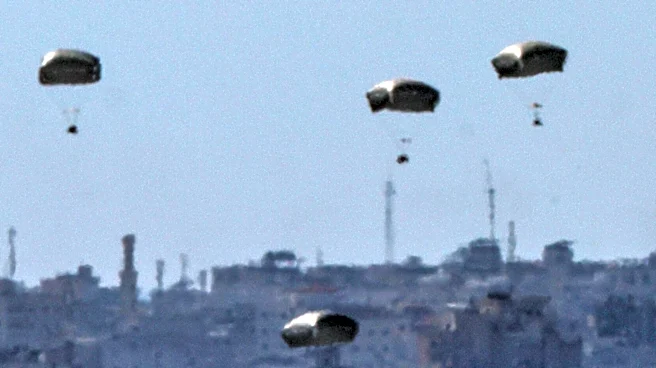
Doctors Without Borders (MSF) reports that Israel's blockade of crucial supplies, including engine oil and spare parts, is severely impacting humanitarian operations in Gaza. This restriction is endangering lifesaving care and reducing access to clean
drinking water for thousands of people. Hospitals and essential services in Gaza are heavily reliant on generators due to electricity cuts and damaged infrastructure. Without engine oil and replacement parts, these generators are breaking down, with no alternative power sources available. MSF has already seen one of its water desalination hub generators damaged due to lack of supplies, leading to a significant reduction in daily drinking water production. The organization states that the supply of engine oil is so limited that prices have increased twentyfold over the last six months, with a gallon costing over $4,900 by the end of July, and its quality and availability cannot be guaranteed. MSF calls on Israeli authorities to immediately lift the blockade on Gaza and allow unhindered entry of all necessary medical, humanitarian, and commercial supplies.
Why It's Important?
The reported blockade of essential supplies by Israeli authorities has critical implications for the humanitarian crisis in Gaza, directly impacting the ability of organizations like Doctors Without Borders to provide basic life-sustaining services. The breakdown of generators due to lack of engine oil and spare parts threatens to halt critical infrastructure, including hospitals, water trucks, ambulances, and bakeries. This situation exacerbates the already dire conditions for the civilian population, increasing the risk of infectious diseases due to reduced access to clean water and sanitation. The inability to power medical facilities means that lifesaving care for patients, including newborns in incubators, is at severe risk. Furthermore, the economic impact of inflated prices for scarce resources like engine oil places an additional burden on humanitarian organizations and local communities, diverting funds from other critical needs. The call for an immediate lifting of the blockade underscores the urgency of the situation and highlights the international community's concern for the humanitarian principles of access and aid delivery.
What's Next?
Doctors Without Borders is urging Israeli authorities to immediately lift the blockade on Gaza to allow the unhindered entry of all medical, humanitarian, and commercial supplies. The immediate future will likely see continued advocacy from international humanitarian organizations for the opening of humanitarian corridors and the easing of restrictions on essential goods. The ongoing situation could lead to further deterioration of public health and infrastructure in Gaza if the blockade persists. The international community may increase pressure on Israel to facilitate aid delivery, potentially through diplomatic channels or by supporting calls for independent investigations into the impact of the blockade on civilian populations. The effectiveness of these calls will determine whether critical supplies, such as engine oil, spare parts, and new generators, can reach Gaza to prevent a complete collapse of essential services and avert further humanitarian catastrophe.
Beyond the Headlines
The reported blockade extends beyond immediate humanitarian concerns, touching upon deeper ethical and legal dimensions of conflict. The restriction of essential supplies, particularly those vital for maintaining basic infrastructure like water and healthcare, raises questions about the adherence to international humanitarian law, which mandates the protection of civilians and the facilitation of humanitarian aid in conflict zones. The systematic destruction of conditions necessary for life, as described by MSF, could have long-term consequences for the region's stability and the well-being of its population. This situation also highlights the complex interplay between security concerns and humanitarian imperatives, where the actions of one party can have profound and far-reaching impacts on civilian life. The long-term implications include potential for increased displacement, heightened public health crises, and a deepening of the humanitarian crisis, which could further destabilize the region and complicate future peace efforts.