




What's Happening?
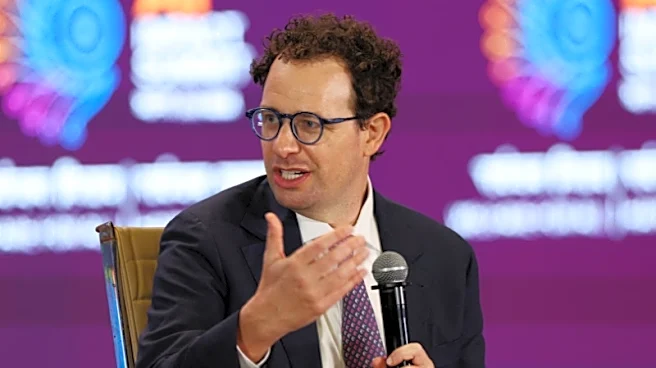
Missy Cummings, who leads a major university Responsible AI program, has publicly challenged the narrative that artificial intelligence (AI) is inherently dangerous and will lead to humanity's demise. She asserts that AI is merely a 'tool in a tool box,
nothing more and nothing less,' and that the 'AI doomer companies' are using fear-mongering as a tactic to reduce expectations, secure government funding, and potentially stifle competition. Cummings acknowledges that AI could cause harm, citing instances with Tesla drivers, but attributes such incidents to 'cutting corners and sloppy engineering' rather than an inherent malevolence of AI itself. She maintains that humanity possesses the knowledge and capability to control AI, but some companies choose not to implement necessary safeguards. Her comments were made in the context of discussions on Jimmy Kimmel Live! and NPR.
Why It's Important?
Missy Cummings' perspective is crucial because it offers a counter-narrative to the prevalent 'AI doomer' discourse, which often sensationalizes the risks of artificial intelligence. By reframing AI as a controllable tool, she shifts the focus from existential threats to the more tangible issues of responsible development, ethical engineering, and corporate accountability. This viewpoint is vital for policymakers, industry leaders, and the public, as it encourages a more balanced and pragmatic approach to AI regulation and innovation. Her emphasis on human control and the potential for 'sloppy engineering' highlights the importance of robust safety protocols and ethical guidelines in AI development. This perspective can help prevent undue panic, foster informed decision-making, and ensure that resources are directed towards practical solutions for AI safety rather than speculative fears, thereby impacting the future direction of AI research and policy in the U.S.
What's Next?
The ongoing debate between 'AI doomers' and those advocating for a more pragmatic view, like Missy Cummings, will likely continue to shape public discourse and policy decisions regarding artificial intelligence. Cummings' arguments could influence regulatory bodies to focus more on establishing clear engineering standards, accountability frameworks, and ethical guidelines for AI development, rather than solely on hypothetical catastrophic scenarios. This might lead to increased scrutiny of AI companies' development practices and a push for greater transparency in their safety measures. Furthermore, her stance could encourage more universities and research institutions to prioritize 'Responsible AI' programs, emphasizing ethical considerations and control mechanisms. The conversation will also likely involve how to balance innovation with safety, ensuring that the U.S. remains competitive in AI development while mitigating potential harms.
Beyond the Headlines
Missy Cummings' intervention in the AI debate delves into the deeper ethical and economic dimensions of technological advancement. Her assertion that 'AI doomer companies' exploit fear for financial gain and to suppress competition raises critical questions about corporate responsibility and the manipulation of public perception. This highlights the potential for powerful entities to shape narratives around emerging technologies to serve their own interests, rather than the collective good. Furthermore, her emphasis on human agency and the ability to control AI underscores a fundamental philosophical debate about the relationship between humanity and its creations. It challenges the notion of technological determinism and reinforces the idea that the future of AI is ultimately a matter of human choice and ethical commitment. This perspective is essential for fostering a society that can harness the benefits of AI while consciously avoiding its potential pitfalls, promoting a more nuanced understanding of technology's role in society.