




What's Happening?
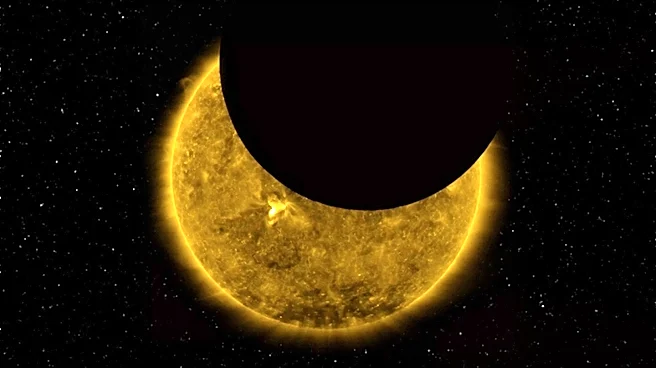
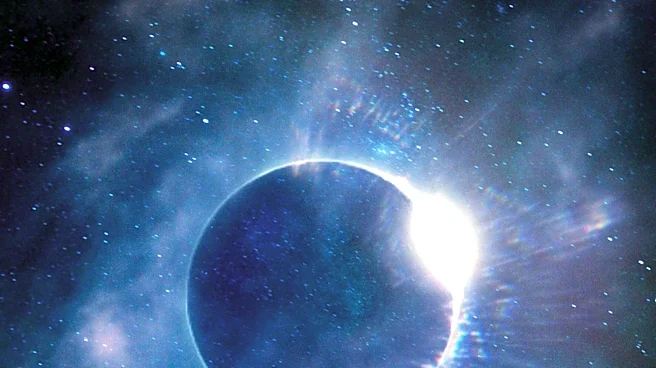
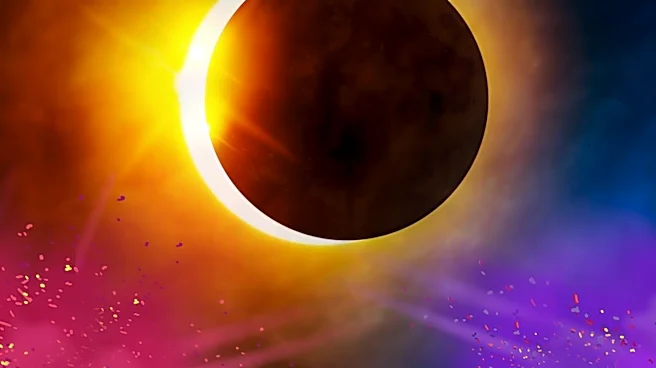
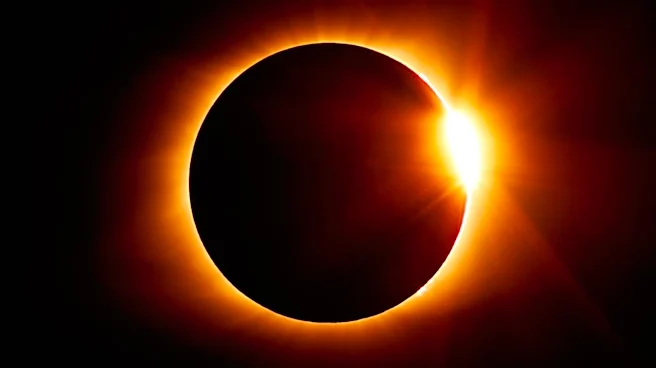
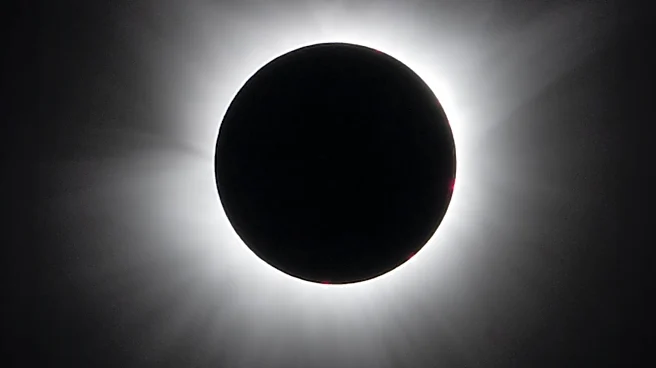
A solar eclipse is set to occur next week, providing a rare viewing opportunity for people across parts of the United States and Europe. While a total eclipse will be visible in regions such as Iceland and Spain, northern parts of the U.S., from Alaska
to North Carolina, will experience a partial eclipse. The event is expected to begin around 1:17 p.m. ET in Washington, D.C., with up to 4% of the sun covered by the moon. Observers are advised to use special eclipse glasses or handheld viewers to safely watch the phenomenon.
Why It's Important?
Solar eclipses are significant astronomical events that offer both scientific and public interest opportunities. For scientists, eclipses provide a chance to study the sun's corona and its effects on Earth's atmosphere. For the public, they offer a rare chance to witness a celestial event that can inspire interest in astronomy and science. The event also highlights the importance of public safety, as improper viewing can lead to serious eye damage. Educational institutions and scientific organizations often use such events to engage the public and promote scientific literacy.
What's Next?
Following this eclipse, the next partial solar eclipse visible in parts of the U.S. will occur on August 2, 2027. A total solar eclipse will be visible across parts of the contiguous U.S. on August 23, 2044. These future events will likely continue to draw public interest and scientific study. In the meantime, organizations like NASA will analyze data collected during the eclipse to enhance understanding of solar phenomena and their impacts on Earth.