





What's Happening?
U.S. lawmakers are increasing pressure on the Trump administration to target Chinese banks that facilitate Iran's illicit oil trade and help it evade sanctions. Rep. Johnny Olszewski (D-Md.) is among the bipartisan group of lawmakers advocating for accountability,
stating that any Chinese financial institution proven to assist Iran's illegal oil transactions must face consequences. This push comes as the U.S. Treasury Department has already expanded its sanctioning powers against foreign entities involved in five key Iranian economic sectors: assets, technology, gold, aviation, and shipping. While initial sanctions have focused on smaller Hong Kong and Chinese entities involved in illegal oil transfers, lawmakers like Olszewski are calling for broader action against larger Chinese financial institutions. The U.S.-China Economic and Security Review Commission (USCC) reports that approximately 90% of Iran's exported crude oil is absorbed by Chinese 'teapot refineries,' with funds often routed through Chinese local banks and then into major Chinese state-owned banks via Hong Kong subsidiaries, creating a closed-loop system.
Why It's Important?
The potential sanctioning of major Chinese banks represents a significant escalation in the U.S. economic pressure campaign against Iran, with far-reaching implications for global finance and U.S.-China relations. Such a move, described by former White House National Security Council China Affairs Director Dennis Wilder as an 'economic nuclear weapon,' could severely disrupt the global financial system. China's four largest state-owned banks collectively hold assets totaling $25 trillion and possess substantial international influence. Excluding them from the U.S. dollar clearing system would directly impact major multinational financial institutions in the U.S., Europe, and Japan. This situation highlights the delicate balance the U.S. must maintain between cutting off Iran's financial lifelines and preserving global financial stability. The decision to sanction these banks would force the Trump administration to weigh the immediate goal of curbing Iran's revenue against the potential for widespread economic fallout and a severe diplomatic crisis with China.
What's Next?
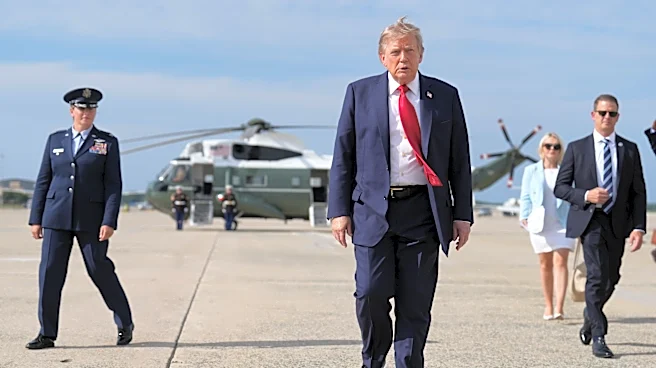
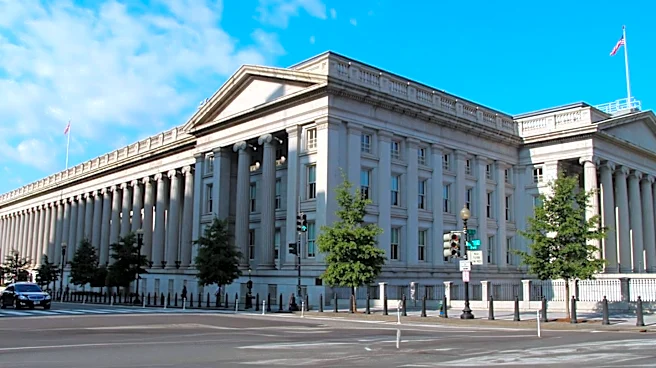
Treasury Secretary Scott Bessent has indicated that sanctions against large foreign financial institutions will be initiated this week, though he also acknowledged the need for a grace period for affected entities, questioning the wisdom of 'blowing up the global financial system.' This suggests a cautious approach, potentially starting with warnings or phased implementation. However, the bipartisan congressional pressure indicates a strong desire for more aggressive action. The timing of any significant sanctions against major Chinese banks is also complicated by President Trump's scheduled meeting with Chinese President Xi Jinping in September. Imposing severe sanctions before this summit could jeopardize high-level diplomatic efforts and potentially trigger retaliatory economic measures from Beijing, such as weaponizing rare earth exports. Lawmakers like Haley Stevens and Zach Nunn have warned that Washington must be prepared for potential economic retaliation from Beijing if such sanctions are enacted.
Beyond the Headlines
The debate over sanctioning Chinese banks for their role in Iran's oil trade extends beyond immediate economic and political considerations, touching upon fundamental questions of international financial governance and the weaponization of economic tools. The U.S. dollar's dominance in global transactions gives the U.S. immense power to enforce its sanctions extraterritorially, a practice that has long been a point of contention with other nations. This situation could accelerate efforts by countries like China to develop alternative financial systems less reliant on the U.S. dollar, potentially leading to a more fragmented global financial landscape. Furthermore, it raises ethical questions about the collective punishment of a nation's financial system for the actions of specific entities, and the broader impact on innocent businesses and individuals. The ongoing disruption of shipping in the Strait of Hormuz further complicates the geopolitical calculus, forcing Washington to balance its strategic objectives in the Middle East with the imperative of maintaining global economic stability.