
What's Happening?
The United States has announced a 30-day waiver on Russian oil sanctions, a decision that has been met with criticism from Ukrainian President Volodymyr Zelensky. The waiver aims to alleviate supply shortages caused by the ongoing conflict in Iran, which
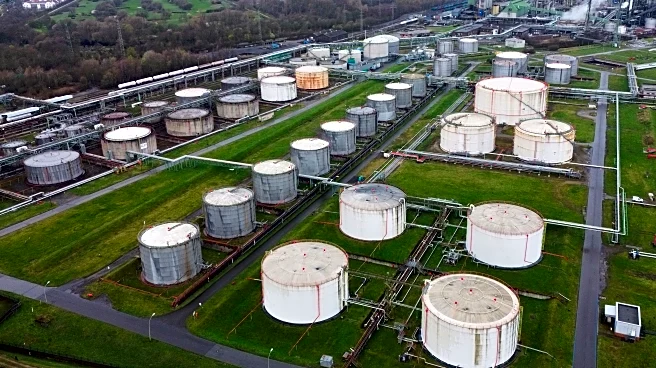
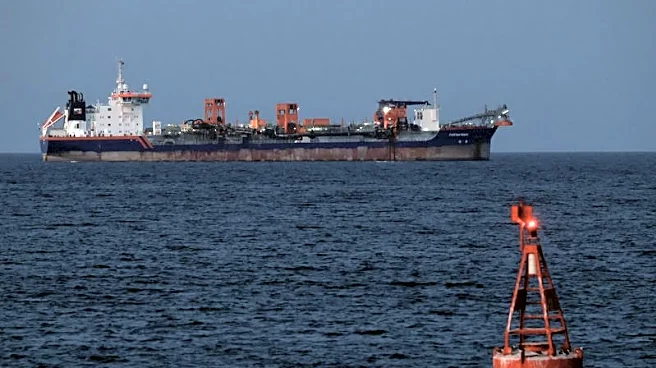
has disrupted oil supplies and driven prices above $100 per barrel. Zelensky argues that this move could provide Russia with significant financial resources, potentially bolstering its military efforts against Ukraine. The U.S. Treasury Department's decision is intended to free up Russian oil cargoes stranded at sea, but it has sparked concerns about undermining the broader sanctions regime against Russia. French President Emmanuel Macron emphasized that the waiver is limited and does not represent a permanent rollback of sanctions.
Why It's Important?
The U.S. decision to temporarily ease sanctions on Russian oil is significant as it highlights the complex interplay between geopolitical conflicts and global energy markets. By allowing Russian oil to enter the market, the U.S. aims to stabilize soaring oil prices, which have been exacerbated by the closure of the Strait of Hormuz due to the Iran conflict. However, this move risks undermining international efforts to pressure Russia economically over its actions in Ukraine. The decision has also led to tensions within the G7, as several member countries, including Germany, have expressed disagreement with the U.S. approach. The waiver could potentially provide Russia with additional revenue to support its military activities, complicating the geopolitical landscape further.
What's Next?
The temporary waiver is set to last for 30 days, during which time the U.S. and its allies will likely reassess the situation. The ongoing conflict in Iran and its impact on global oil supplies will be closely monitored. Additionally, U.S.-mediated talks between Russia and Ukraine, which are currently on hold, may resume, potentially influencing future decisions on sanctions. The international community will be watching to see if the waiver leads to any significant shifts in Russia's military strategy or economic stability. The U.S. may also face pressure to justify its decision and address concerns from allies about the potential long-term implications of easing sanctions.