






What's Happening?
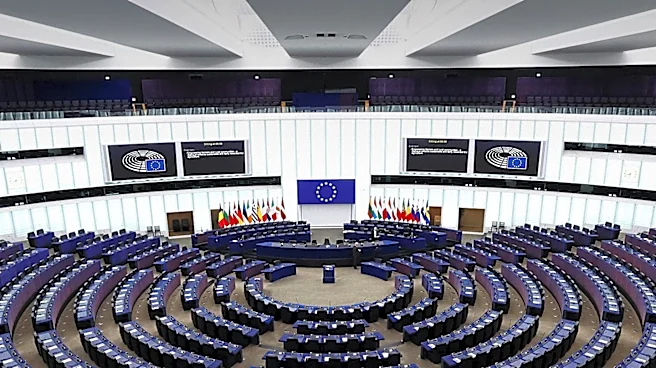
The European Union has officially rejected any forced displacement of Palestinians from the Gaza Strip and opposes attempts to impose demographic or territorial changes on the enclave. A European Commission spokesperson, Christian Wigand, stated that
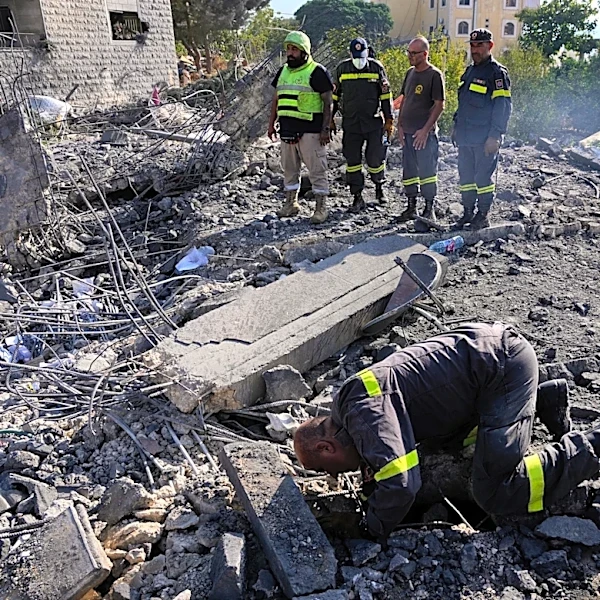
the EU aligns with UN Security Council Resolution 2735, which prohibits altering Gaza's demographic or territorial character. Wigand emphasized that Gaza is an integral part of a future Palestinian state and reaffirmed the EU's support for the reunification of the Gaza Strip and the occupied West Bank, including East Jerusalem, under the Palestinian Authority. This stance comes in response to recent statements by senior Israeli officials, including Defense Minister Israel Katz and National Security Minister Itamar Ben-Gvir, who have proposed plans to facilitate the departure or mass removal of Palestinians from Gaza. The EU has described such rhetoric as unacceptable and called for de-escalation efforts.
Why It's Important?
The EU's firm stance underscores international concerns regarding the future of Gaza and the broader Israeli-Palestinian conflict. By rejecting forced displacement and demographic changes, the EU is reinforcing principles of international law and humanitarian norms, which could influence global diplomatic efforts. This position also signals a potential point of contention with certain Israeli government factions advocating for such proposals. The EU's emphasis on Gaza as part of a future Palestinian state and its support for Palestinian Authority administration highlights its commitment to a two-state solution, a long-standing international objective. This could impact future peace negotiations and the legitimacy of any post-conflict arrangements for Gaza, potentially influencing U.S. foreign policy as well, given its own stated opposition to forced displacement.
What's Next?
The EU's clear rejection of forced displacement and demographic changes in Gaza is likely to maintain international pressure on Israel regarding its post-conflict plans for the territory. This stance may encourage other international bodies and nations to reiterate similar positions, potentially isolating any proposals for mass removal of Palestinians. Future diplomatic discussions regarding Gaza's reconstruction and governance will likely be framed by these principles, with the EU advocating for solutions that align with its vision of a unified Palestinian state. The United States, which has also expressed opposition to forced displacement, may find common ground with the EU on this issue, potentially leading to coordinated diplomatic efforts to shape the future of Gaza and advance a two-state solution.
Beyond the Headlines
The EU's statement goes beyond immediate policy by addressing fundamental questions of sovereignty, human rights, and the future of the Palestinian people. The rejection of demographic and territorial changes touches upon the core of international law concerning occupied territories and the protection of civilian populations. This position also implicitly challenges narratives that might seek to alter the status quo in Gaza in ways that undermine Palestinian self-determination. The long-term implications could include a strengthening of international legal frameworks against forced displacement in conflict zones globally, setting a precedent for how the international community responds to similar situations. It also highlights the ongoing tension between national security concerns and international humanitarian obligations in protracted conflicts.