






What's Happening?
Author and journalist Patrick T. Reardon, known for his 2020 book 'The Loop: The “L” That Shaped and Saved Chicago,' recently discussed his work and insights into the city's iconic Elevated Loop. Reardon, who spent three decades writing for the Chicago Tribune,
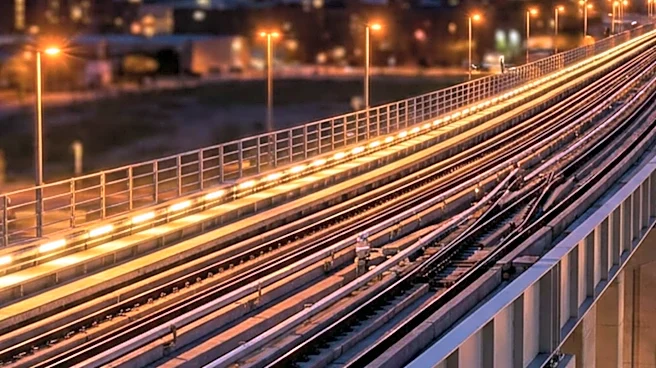
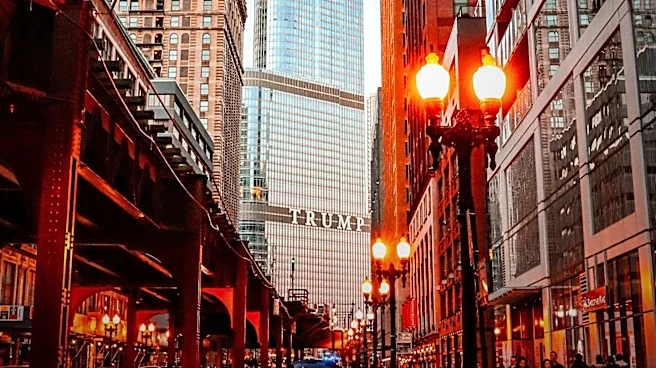
argues that the Elevated Loop is the most important structure in Chicago's history. He highlights its role in knitting the city together, protecting and creating the downtown area, and ultimately safeguarding the rest of Chicago. Reardon's research, which spanned 11 years, delved into the origins of the term 'The Loop,' debunking the long-held belief that it originated from cable car loops. He meticulously tracked the usage of the word in thousands of Tribune articles, concluding that the term for downtown emerged after the Elevated Loop was built in 1897, evolving through public discourse by 1911. His work emphasizes the profound social implications of physical structures on urban development and identity.
Why It's Important?
Reardon's analysis underscores the critical impact of urban infrastructure on a city's economic and social fabric. The Elevated Loop, by concentrating wealth and activity within its confines, played a pivotal role in Chicago's resilience against suburbanization, a trend that devastated many other American downtowns post-World War II. This historical perspective offers valuable lessons for urban planners and policymakers today, illustrating how strategic infrastructure investments can shape a city's character, foster community, and drive economic stability. The book also highlights the ongoing tension between functional necessity and aesthetic perception, as the 'L' was often criticized for its appearance but was indispensable to daily life and commerce. Understanding these dynamics can inform contemporary debates about urban development, public transportation, and the preservation of historical landmarks in U.S. cities.
What's Next?
Reardon hopes his work will influence decision-makers to recognize the significant social implications of physical structures. He advocates for a deeper understanding that building or removing infrastructure has far-reaching and often unforeseen consequences. The ongoing discussions about urban planning, public transit, and historical preservation in Chicago and other major U.S. cities could benefit from Reardon's insights into how physical elements can either unite or divide communities. His research encourages a more thoughtful approach to urban development, considering not just immediate needs but also long-term societal impacts. The book's legacy aims to foster policies that prioritize structures capable of bringing people together and strengthening urban cohesion.
Beyond the Headlines
The deeper implications of Reardon's work extend to the cultural and literary identity of Chicago. The Elevated Loop is not merely a transportation system but a recurring motif in Chicagoan literature and film, symbolizing the city's grittiness, dynamism, and unique character. Its presence in narratives by authors like Carl Sandburg and Jane Hamilton illustrates how infrastructure can become an integral part of a city's artistic representation. Furthermore, the historical struggle to preserve the 'L' against calls for its demolition, notably in 1978, reveals the complex interplay between public utility, architectural criticism, and political will. This ongoing dialogue about the value of existing infrastructure versus modern alternatives highlights broader questions about urban heritage, progress, and the collective memory of a city.