







What's Happening?
The President Trump administration abruptly terminated the 'Solar for All' federal grant program in August 2025, before allocated funds could reach states. This program, launched in 2024 by the EPA, was designed to provide $7 billion in grants to expand
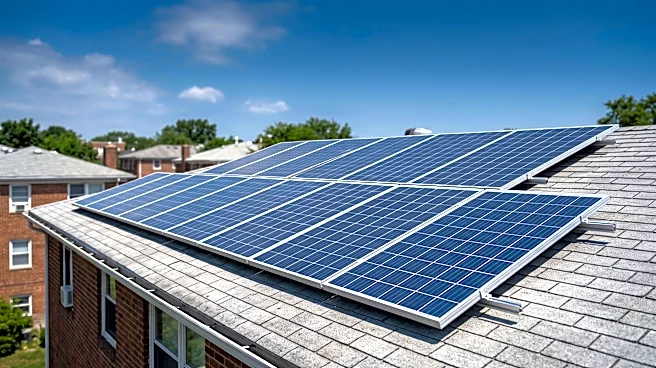
rooftop solar panel access for low-income households and communities that traditionally could not afford or access them. The program aimed to guarantee a 20% savings on electricity bills for participating households, with an estimated national saving of $350 million annually and the creation of 200,000 new jobs. For instance, the Veterans Benefits Clearinghouse Development Corporation (VBCDC) in Massachusetts, which sought to install solar panels on 17 multifamily housing sites, was only able to complete six projects after the program's cancellation, despite prior planning with Resonant Energy. The Conservation Law Foundation (CLF) and its partners have filed a lawsuit against the federal government, challenging the legality of the program's termination.
Why It's Important?
The termination of the 'Solar for All' program has significant implications for energy equity and the clean energy transition in the U.S. The program was specifically designed to address energy poverty, where approximately 28 million households spend a disproportionate amount of their income on energy bills. Its cancellation directly impacts the ability of these households to access more affordable and sustainable energy options, potentially exacerbating financial burdens. Furthermore, the program's goal of creating 200,000 jobs and workforce training opportunities in the solar sector is now jeopardized, hindering economic development and skill-building in the clean energy industry. This move also signals a broader policy shift away from federal support for distributed solar initiatives, potentially slowing the pace of renewable energy adoption and the U.S.'s progress towards climate goals. The lawsuit filed by CLF underscores the legal and public opposition to this decision, highlighting the perceived unlawful nature of the termination and its detrimental effects on communities and the environment.
What's Next?
The Conservation Law Foundation and its partners are actively pursuing legal action against the federal government to reverse the termination of the 'Solar for All' program. The outcome of this lawsuit will be crucial in determining the future of federal support for low-income solar initiatives. In the interim, states and local entities are being urged to step up and fill the funding gap. Isaac Baker, Co-CEO of Resonant Energy, emphasizes the critical role of state and utility-level leadership in mitigating rising energy costs for consumers and ensuring the survival of the solar industry. This could involve increased state-level grant programs, incentives, and policy support for community solar and affordable housing solar projects. The clean energy sector, including companies like Resonant Energy and Boston Community Solar Cooperative, is expected to continue advocating for and implementing solar projects, even in the absence of federal 'Solar for All' funding, demonstrating resilience and commitment to clean energy goals.
Beyond the Headlines
The cancellation of the 'Solar for All' program reflects a broader ideological conflict regarding energy policy in the U.S., pitting clean energy advocates against those who prioritize fossil fuel industries. This decision, framed by some as part of an 'administration’s war on clean energy,' highlights the vulnerability of environmental and social programs to political shifts. Beyond the immediate financial impact, the termination erodes trust in federal commitments and creates uncertainty for long-term planning in the renewable energy sector. It also raises questions about the balance of power between federal agencies and the executive branch, particularly concerning the EPA's role in environmental protection and climate action. The legal challenge by CLF could set a precedent for future disputes over federal program cancellations, potentially influencing the stability and predictability of environmental policies. This situation underscores the ongoing struggle to advance clean energy solutions in a politically charged environment, where the benefits of renewable energy for public health, economic growth, and climate resilience are often weighed against short-term political and economic interests.