

What's Happening?
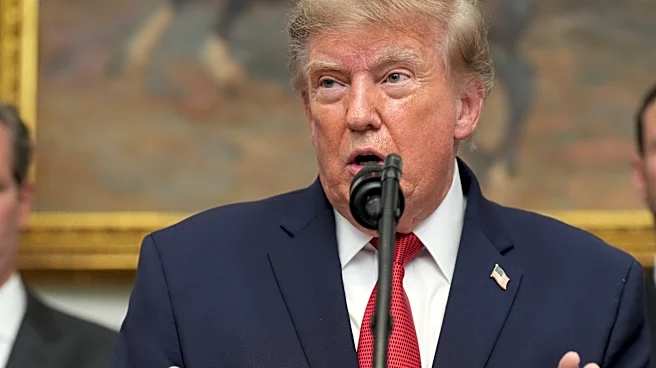
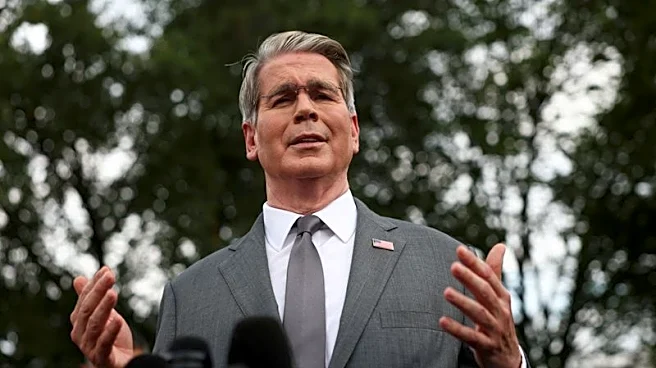
President Trump, speaking at a rally in Myrtle Beach, South Carolina, declared the Strait of Hormuz as 'American territory' and issued a stern warning to Iran regarding its pursuit of nuclear weapons. He asserted that Iran must 'never be allowed to obtain
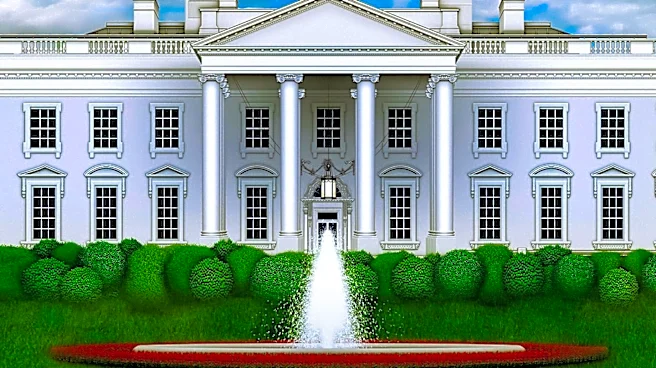
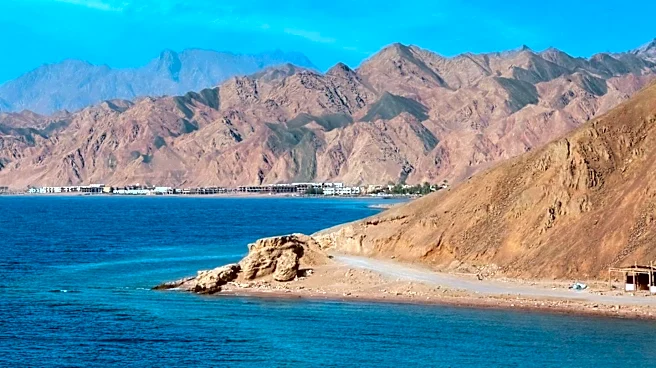
a nuclear weapon,' stating that the United States had previously 'stopped them' and would ensure they 'will never have a nuclear weapon.' President Trump also indicated that while Iran desires a deal, he questioned whether Washington would accept one, emphasizing the United States' control over the strategic waterway. These remarks come amidst ongoing tensions between Washington and Tehran concerning the Strait of Hormuz, a critical passage for global energy supplies. Earlier, President Trump had shared an AI-generated image on his Truth Social platform depicting the Strait as 'NEW U.S. Territory,' further asserting U.S. control over the region.
Why It's Important?
President Trump's declaration of the Strait of Hormuz as 'American territory' and his strong stance on Iran's nuclear ambitions carry significant geopolitical implications. The Strait of Hormuz is a vital chokepoint through which a substantial portion of the world's oil supply passes, making its control a matter of international economic and strategic importance. This assertion of U.S. territorial claim, if acted upon, could escalate tensions with Iran and potentially other nations in the region, impacting global trade and energy markets. The warning against Iran developing nuclear weapons reinforces a long-standing U.S. foreign policy objective, but the assertive language could be perceived as provocative, potentially complicating diplomatic efforts. The situation could lead to increased military presence in the region, affecting shipping routes and insurance costs, and creating uncertainty for international businesses reliant on the stability of the Persian Gulf.
What's Next?
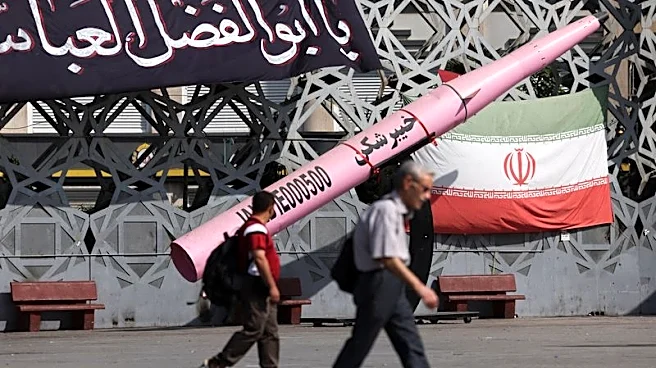
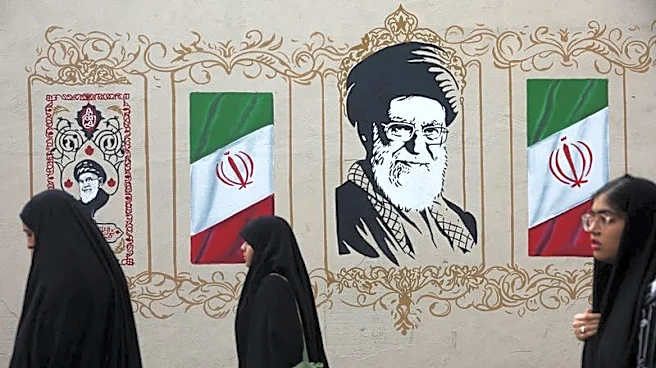
Following President Trump's statements, reactions from Iran and the international community are anticipated. Iranian officials have already rejected President Trump's claims, with Deputy Foreign Minister Kazem Gharibabadi stating that President Trump's 'delusion' regarding the Strait of Hormuz would be 'corrected.' Iran's Supreme National Security Council head Mohsen Rezaei also criticized the remarks, highlighting the perceived gap between America's claims and its capabilities. The Iranian Parliament Speaker, Mohammad Bagher Ghalibaf, has indicated that Tehran would not reopen the Strait of Hormuz until the United States fulfills commitments under a 14-point memorandum, including lifting blockades and easing oil sanctions. These responses suggest a continued standoff, with potential for further diplomatic exchanges, increased military posturing, or economic pressures. The international community will likely monitor the situation closely for any developments that could impact global energy security and regional stability.
Beyond the Headlines
President Trump's assertion of the Strait of Hormuz as 'American territory' raises profound questions about international law, sovereignty, and the future of global maritime governance. Such a declaration challenges established norms of international waters and could set a precedent for other powerful nations to make similar claims over strategic chokepoints. This move could lead to a re-evaluation of maritime boundaries and rights, potentially destabilizing existing international agreements and increasing the risk of conflicts. Furthermore, the use of an AI-generated image to visually represent this territorial claim highlights the evolving role of digital media and artificial intelligence in international diplomacy and propaganda. This blend of political rhetoric with advanced technology could influence public perception and international discourse in unprecedented ways, adding a new layer of complexity to geopolitical strategies and communication.