

What's Happening?
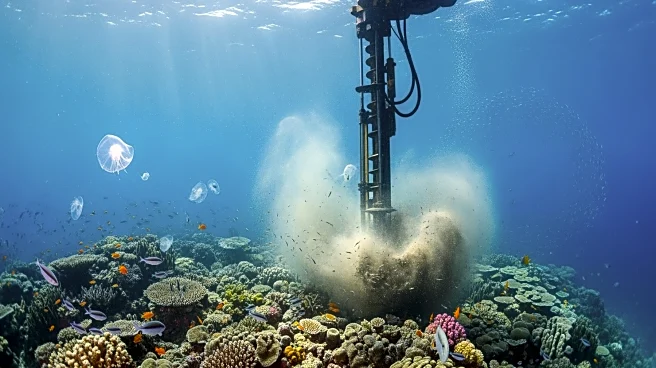
Deep-sea mining operations in the Pacific Ocean are raising concerns about environmental impacts on vulnerable marine ecosystems. The extraction of polymetallic nodules from abyssal plains threatens biodiversity and could disrupt marine food webs. Pacific Island
nations face economic trade-offs as they consider sponsorship agreements for mining activities, with revenue-sharing models offering modest returns compared to environmental risks. The long-term recovery of deep-sea ecosystems may take decades, creating liabilities that outweigh immediate financial benefits.
Why It's Important?
The environmental implications of deep-sea mining are significant, potentially affecting food security and economic stability for Pacific Island nations. The disruption of marine ecosystems could lead to fisheries collapse, impacting local economies reliant on commercial fish populations. The situation highlights the need for sustainable development models that prioritize environmental protection and long-term economic resilience. Pacific Island nations must navigate complex negotiations to secure equitable compensation and safeguard their natural resources.
Beyond the Headlines
The governance frameworks for deep-sea mining lack comprehensive environmental protection standards, posing challenges for Pacific Island nations. Alternative economic models, such as marine protected areas and renewable energy development, offer sustainable pathways that align with climate adaptation needs. Collective action and regional cooperation can enhance negotiating leverage, ensuring that Pacific Island nations receive fair compensation and maintain control over their marine resources.