
What's Happening?
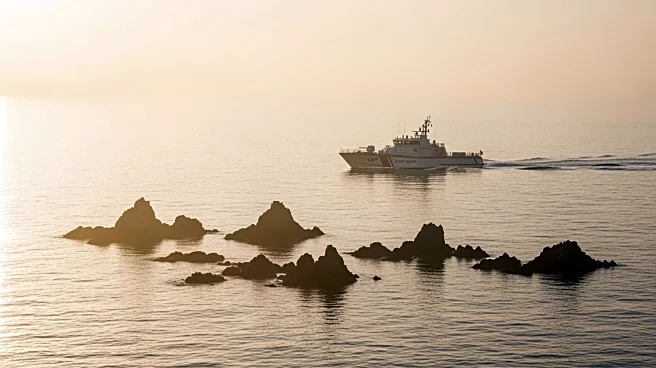
Japan is set to enhance its coast guard patrols around a disputed group of islands in the East China Sea, known as the Senkakus in Japan and the Diaoyus in China. This decision comes in response to China's
expanding presence in the area. The islands have been a point of contention since Japan nationalized them in 2012, with Taiwan also claiming them as the Diaoyutais. The United States, while not taking a position on sovereignty, has confirmed that the Japan-U.S. Security Treaty applies to these islands. Prime Minister Sanae Takaichi announced plans for larger patrol boats and increased cooperation between the coast guard and defense ministry. The move is part of a broader strategy to promote a free and open Indo-Pacific, involving regional partners like the U.S., South Korea, Australia, India, and the Philippines. A recent Japanese coast guard report noted that Chinese vessels have been observed in the contiguous zone around the islands for 341 days, continuing an upward trend.
Why It's Important?
The increased patrols by Japan highlight the ongoing tensions in the East China Sea, a region with significant strategic and economic importance due to its potential oil and natural gas reserves. The situation underscores the delicate balance of power in the region, where Japan seeks to assert its territorial claims against China's assertive maritime activities. The involvement of the U.S. through the security treaty adds a layer of international complexity, potentially affecting U.S.-China relations. The move by Japan could be seen as a deterrent against further Chinese incursions, but it also risks escalating tensions, which could impact regional stability and international trade routes.
What's Next?
The increase in Japanese patrols may lead to heightened tensions between Japan and China, with potential implications for regional security. The situation could prompt diplomatic engagements or military posturing from both sides. Japan's actions might also influence other regional players, potentially leading to a reevaluation of their own maritime strategies. The international community, particularly the U.S., will likely monitor the situation closely, given its security commitments to Japan. Future developments could include diplomatic negotiations or increased military presence in the region by involved parties.